
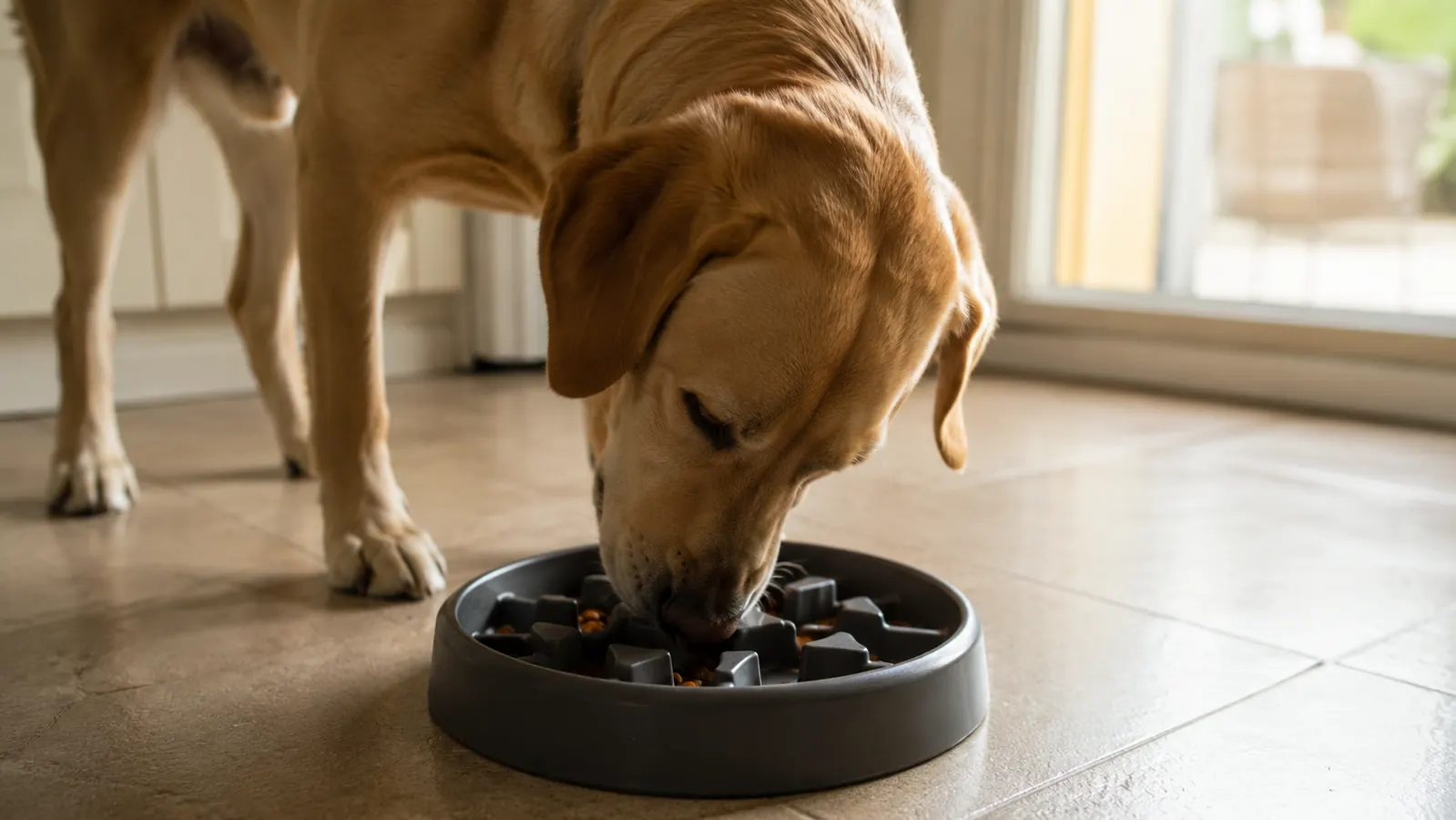
The MateeyLife 2-pack slow feeder bowl is the tool I reach for to slow that race down. If your dog finishes dinner before you finish pouring your own, you already know the problem. The bowl is empty in under a minute, usually in a few frantic gulps, and the moment is over before it ever felt like a meal. I have watched this exact scene play out for years, in my own house and in plenty of others. A fast eater turns every meal into a race, and the race is worth slowing down.
The tool everyone reaches for is a slow feeder bowl, and it genuinely works. But a slow feeder used wrong is just a bowl with extra steps. The dog either works around it in two bites or gets frustrated and quits. So this is not a one-product answer. This is the full plan: how to pick the size, what the first few meals should look like, how to pace the dog past the panic phase, and the moment when gulping stops being a habit and starts being a reason to call a vet.
The 2-Pack Maze Bowl That Actually Slows a Race
I keep coming back to a 2-pack maze-style slow feeder that does the one job a slow feeder should: makes a fast eater work for every bite without frustrating them out of the bowl. Two bowls means one dries while the other gets used, and they go through the dishwasher. Worth having before you start.
Amazon Check Today's Price on Amazon →Step 1: Pick the Right Size and Shape
Size is the first thing to get right, and it is the step people skip. A slow feeder works by forcing the dog to work around obstacles to reach the food. If the bowl is too small for the meal, the dog can reach the ridge with one swipe, or the food piles so high it stops being an obstacle and becomes a mound to vacuum. If it is too big, the food spreads too thin and the dog gives up on the corners.
Look at how much your dog eats in one sitting, not how much the bowl holds on paper. The MateeyLife 2-pack holds 2 cups per bowl, which covers a standard adult dog's meal for most households. If your dog eats more than that per meal, split the food or use the bowl for a smaller portion and top up later. The goal is food spread in the valleys, not heaped above the ridges, because a covered ridge is no longer an obstacle.
Shape matters less than you think, but buy the maze style for a genuinely fast eater. Deep ridge patterns force slower work. A shallow pattern might as well be a plate for a determined gulper. And get the 2-pack. One bowl in the dishwasher while the other is in use means you never hand a wet, food-logged bowl back to a hungry dog. The second bowl also gives you a spare when the first one goes missing behind the couch.
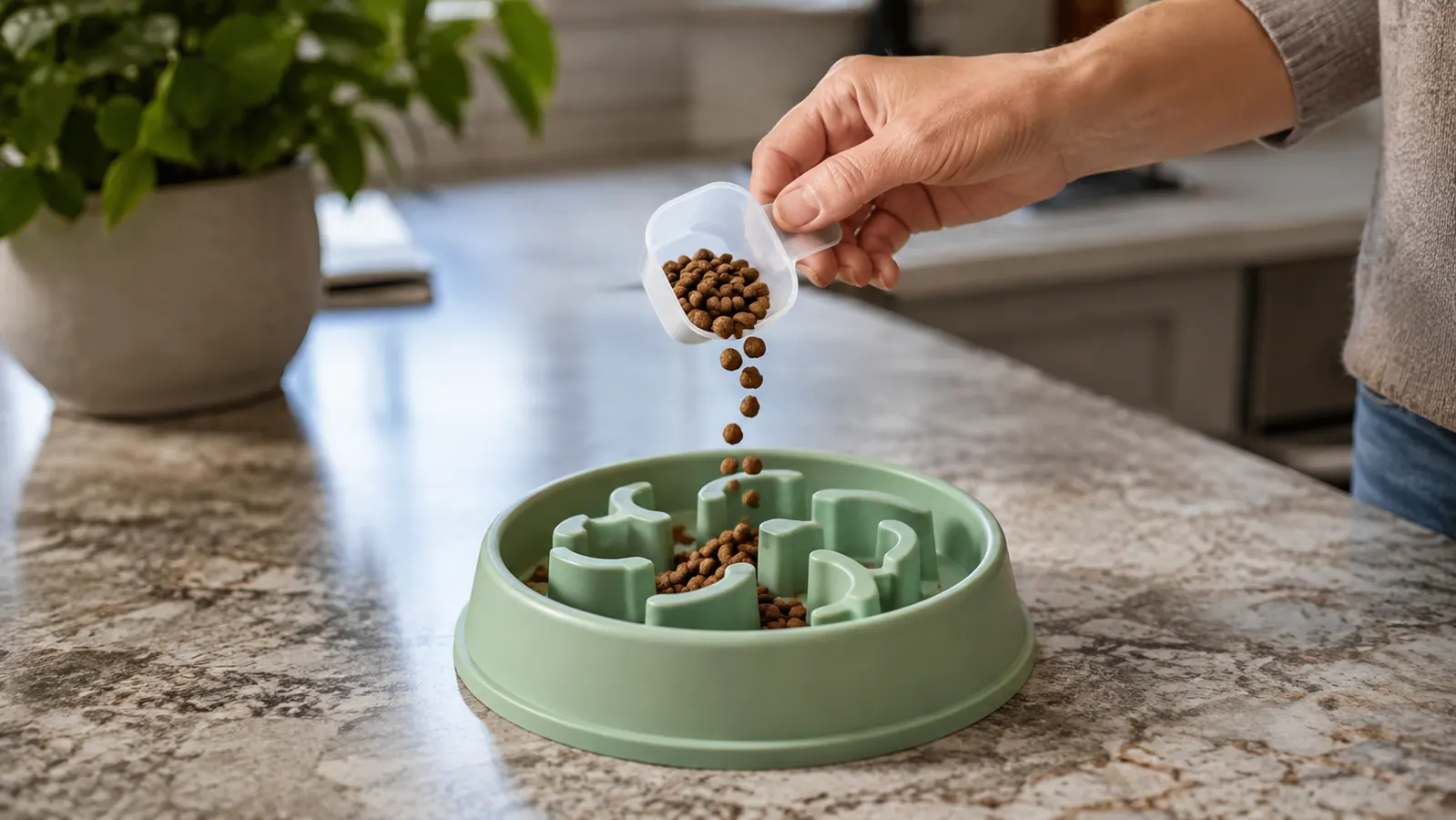
Step 2: Start With the First Meal Easy
The very first time a fast eater meets a maze bowl, many of them do not understand what is happening. They dive in, hit the ridges, and one of two things happens. Some slow right down and work it out. Others get genuinely frustrated, push the bowl, paw at it, and may bark at it or walk away to a familiar spot. Neither response means the tool is wrong. It means the dog is still reading the room.
Do not add frustration on top of a new tool. For the first two or three meals, feed exactly as you normally would but in the slow feeder, and do not change the food, the location, or the time. Same kibble, same spot, same schedule. The only variable changing is the bowl. That keeps the new tool the single adjustment instead of a laundry list your dog has to decode all at once.
If your dog refuses the bowl entirely, go back a step without giving up on the plan. Put a few pieces of food on top of the ridges, just enough to show them it is reachable. Once they clear the easy bites and discover the valleys underneath, most dogs get the idea within a meal or two. Patience in the first week pays off for every meal after, because you are building the habit instead of fighting it.
Step 3: Measure the Meal, Split It, and Pace It
Gulping is partly a habit and partly trying to eat fast before something takes the food away. You can work on both at once. The single most useful change is to stop pouring the whole meal in at once and give it in a few smaller pours instead. The bowl slows the reach. The split pours slow the race.
Pour a third of the meal, let the dog work through it, then add another third, then the last third. That pause in the middle is doing the work a slow feeder cannot do alone. It tells the dog the food keeps coming, that there is no reason to sprint for the whole serving at once. Older dogs and dogs who have competed over food settle into this rhythm fastest, because it removes the very thing they were guarding against.
Stay close and stay calm. If you hover or rush, you telegraph that food is scarce and the race is on. A relaxed presence, maybe one hand on the bowl to stop it skidding the first few meals, signals the opposite. You do not need to time anything and you do not need a timer. Just pour, let them eat, pour again, and keep your own pace unhurried.
Step 4: Make the Feeding Corner Low-Stress
A slow feeder fixes the speed of eating. It cannot fix a nervous dog who is racing because meal time feels like a high-stakes event. Spend a few meals looking at the feeding setup with fresh eyes, because the bowl is only one part of the picture. Where and how a dog eats matter as much as what they eat from.
Feed in the same quiet spot every meal, away from the door, the hallway, and the path other animals walk. If you have more than one pet, feed them where they cannot see or crowd each other. A dog who bolts their food because a sibling hovers is not gulping from hunger, they are gulping from worry, and no bowl fixes that on its own. Space solves more than any ridge pattern.
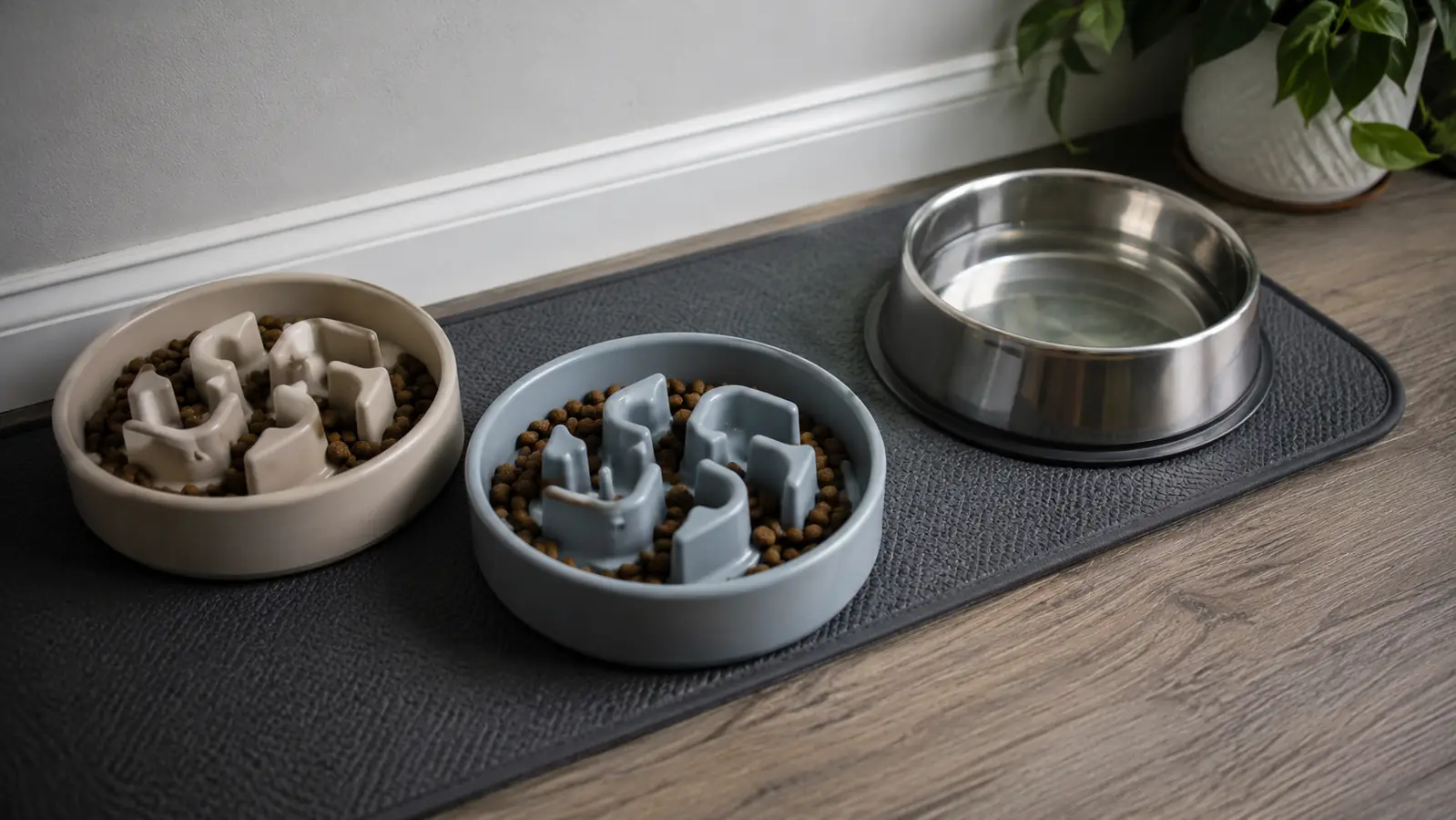
Check that the bowl is not sliding across the floor. A maze bowl that skids on a slick floor adds frustration and makes the dog chase it around the room, which reopens the whole race. The MateeyLife has a non-slip base, but on very smooth flooring a mat underneath helps a lot, especially for a dog who eats like it is a contact sport. A stable bowl is a calm bowl.
Step 5: Watch the Meals Over Time and Know When to Ask a Vet
A slow feeder is not a forever crutch for every dog, and that is fine. Over a week or two, watch for the meals to get calmer. A normal result is a dog who eats steadily, pauses, and finishes in a few minutes instead of a few seconds. That is the goal. Some dogs keep working a maze bowl their whole life and love it. Some learn to eat slower and can be moved back to a regular bowl with the pacing habit still in place. Both are good outcomes.
Gulping is a behavior to manage, and for most dogs a slow feeder plus these habits is the whole fix. But fast eating is also something a vet should hear about if it pairs with real signs. I am a routine pet owner, not a veterinarian, and this is the line I draw. If a dog inhales food and then repeatedly vomits it back, if they gag or cough during meals, or if they seem painful or bloated after eating, that is not a bowl problem. That is a reason to make a vet call. Bloat is serious and needs a vet, not a feeding hack.
Whatever happens the first week, stay consistent. The fast eater who still gulps at meal four is not failing, they are relearning a habit that took months or years to form, and that takes more than a few days. Keep the same bowl, the same spot, and the split pours, and judge progress in weeks, not in single meals. A dog who takes one extra pause today will take two tomorrow, and the meals will keep getting calmer.
What Else Helps
The slow feeder does most of the work, but a few small habits reinforce it and cover the cases a bowl cannot. None of these is complicated. They are just the difference between handing a dog a tool and actually fixing the habit, and you can layer them on a week at a time.
Scatter feeding works for some dogs: tossing the meal across a clean mat or a low patch of lawn turns dinner into a slow foraging game with no bowl at all. It spreads the food out and makes the dog hunt for each piece, which is the exact opposite of gulping. It is messy and needs a washable surface, but for the right dog it beats any bowl.
A proper food puzzle toy is the natural next step up from a maze bowl, trapping kibble behind moving parts and forcing a dog to nudge, slide, and solve for every piece. It is a good option for a dog who outgrows a stationary maze or who eats too fast no matter where you put the bowl. Start with a simple puzzle and watch the frustration level, because some dogs quit if a toy is too hard at first.
Splitting a big dinner into two smaller meals also takes the pressure off a single serving, which helps big dogs in particular. And keep the water bowl filled and clean nearby, because a maze bowl makes a thirsty eater's meal a little more work. None of these replaces the base plan. They layer on top of it and make it stick, and you will know fairly quickly which ones your dog actually needs.
The pause between pours is doing more than any bowl: it tells a worried eater the food keeps coming, so there is no reason to race.
One thing worth setting straight before you try it: the bowl slows the meal, it does not calm the dog. If the gulping is a habit born of competition, habit, or plain enthusiasm, the feeder turns dinner into a puzzle the dog has to work through a few minutes at a time. If the gulping comes with real distress, pain, or a sudden change in eating, stop and ask a vet before you change anything, because a bowl is not a treatment for a medical problem.
Start Tonight With a Clean, Non-Slip Slow Feeder
The whole plan rests on one reliable tool. A 2-pack maze-style slow feeder that is food-safe, dishwasher-safe, and non-slip lets you start Step 1 this evening and wash one bowl while the other is in use. That first meal is easier than you think.
Amazon Check Today's Price on Amazon →