
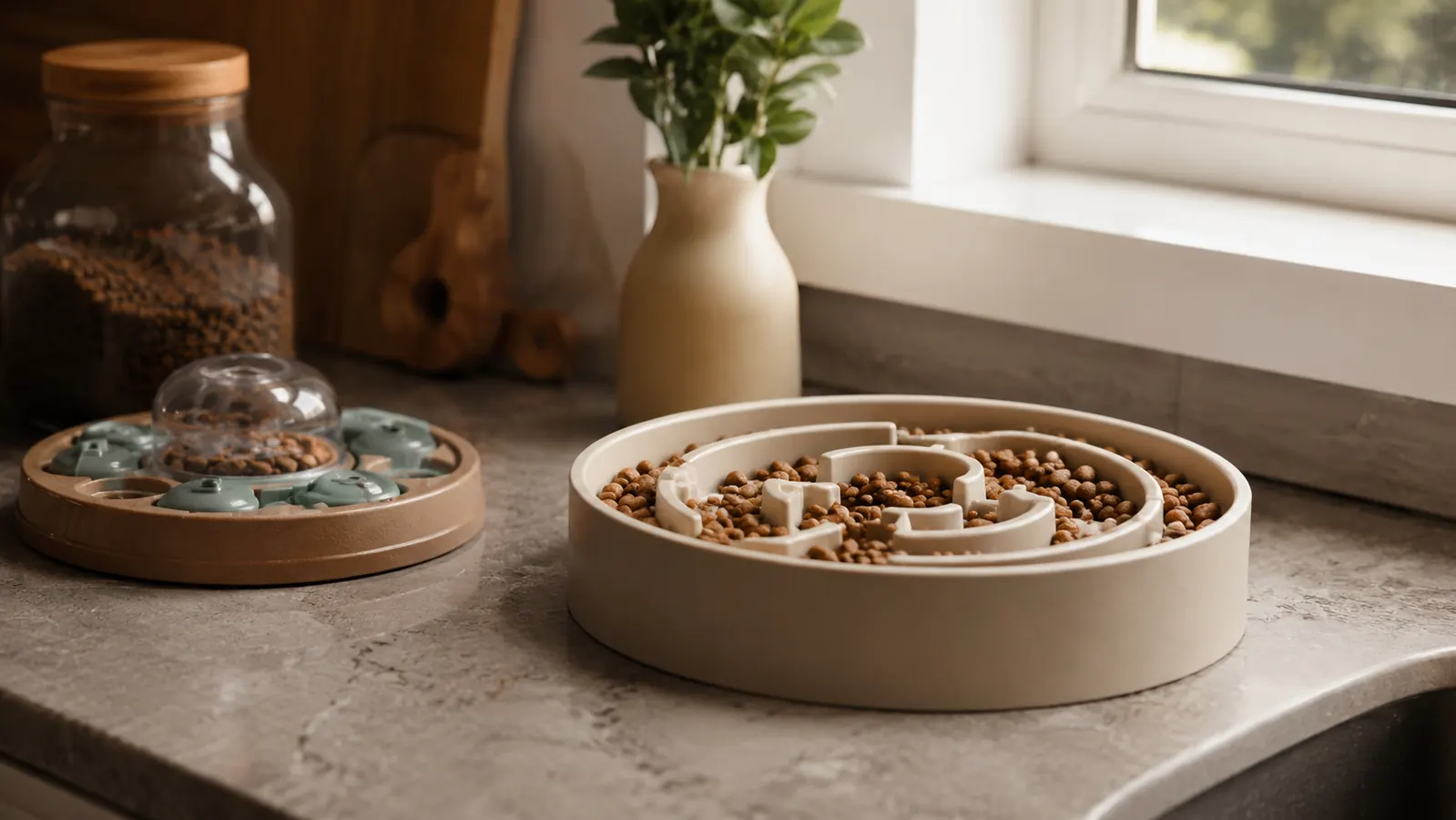
If you have a dog that inhales dinner in under a minute, you have probably looked at a slow feeder bowl, then at a puzzle feeder, and wondered which one is the fix. I have used both for weeks at a time on the same fast eaters, so let me settle it in one line: the MateeyLife slow feeder bowl is the everyday answer for gulpers, and a puzzle feeder is the tool you reach for when the problem is boredom, not speed. They solve different jobs, and most households honestly want the bowl first.
The bowl slows eating by force of design. Dry kibble gets wedged into a maze of ridges and valleys, so the dog has to work every piece out with its tongue, and a meal that took thirty seconds stretches to six or eight minutes. A puzzle feeder slows things differently. It hides food under sliding covers or inside compartments that the dog has to nudge, flip, or slide to reach. Both slow a guzzler down. That is where the agreement stops, and the differences are worth thinking through before you spend.
| MateeyLife Slow Feeder | Puzzle Feeder | |
|---|---|---|
| Price | Two bowls for the price of most single bowls, and they last | Usually a one-piece toy, and often pricier per unit |
| Slows fast eaters | Forces slower eating on every kibble meal by design | Slows only as much as the dog works the puzzle |
| Cleanup | Dishwasher-safe, one flat piece, rinse in seconds | Multiple covers and compartments, mostly hand-wash |
| Mental enrichment | Minor, it mainly slows the act of eating | Real brain work and problem solving every session |
| For picky or older dogs | Seems like a normal bowl, low frustration | Can frustrate a dog that would rather not work for food |
| Best use | Everyday kibble meals for a gulper | Treats, snacks, and boredom on rainy afternoons |
The simplest fix for a 30-second dinner
If your dog inhales kibble and looks up asking for more, the MateeyLife slow feeder bowl forces a slower meal without any training or gadget tricks. Today's price is worth it just for the calm at dinnertime, and you get two bowls for the trouble.
Amazon Check Today's Price on Amazon →How I Compared Them
I ran both side by side for the same fast eaters, on the same kibble, for several weeks each. With the bowl I tracked one thing: how long a normal meal took from first bite to last. With the puzzle I watched something a little different, because the goals were different. I wanted to know how long a portion lasted, how much was actually eaten versus abandoned, and how long it took to wash the thing afterward. I also paid attention to which tool the dogs reached for on their own, because a feeding gadget that nobody wants to use is not going to change anything.
The results were not close, and they were not a surprise either. The bowl turned a thirty-second meal into a steady six to eight minute one, every time, with nothing else required of me than filling it. The puzzle occupied a dog for minutes at a stretch and was clearly the more engaging of the two, but it did not tenaciously slow a gulper the way the maze did, and it was noticeably more work to rinse clean. Both work. They just work on different problems, which is the point of this whole comparison.
Where the MateeyLife Slow Feeder Wins
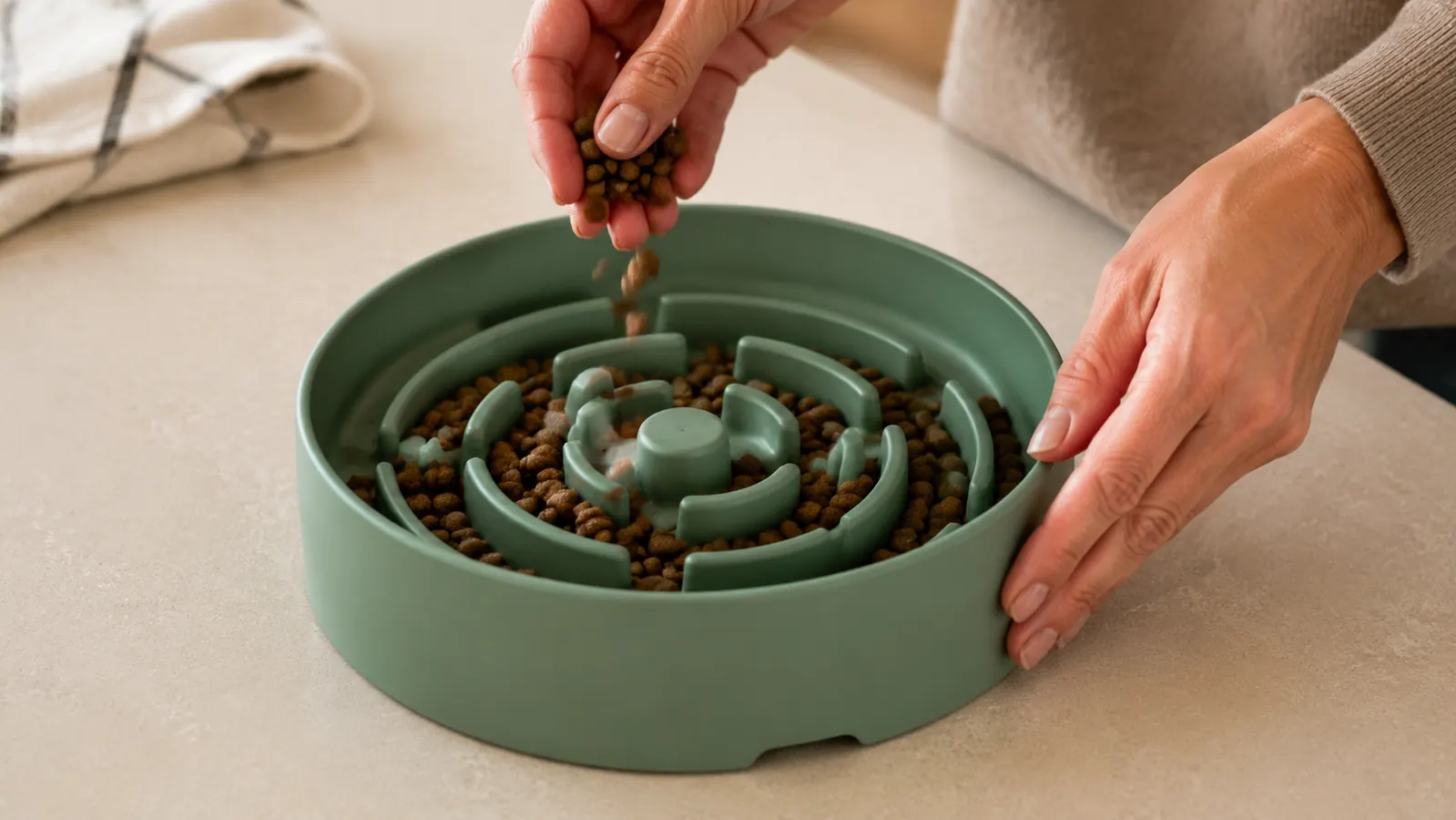
The bowl wins on the thing it is actually for: making a fast eater slow down, every single meal, whether you are home to supervise or not. You put the kibble in the maze, set it down, and the geometry does the work. There is no level of effort on the dog's part to skip. A dog can rush a bowl only so much before it has to stop and fish each piece out of a ridge, so the slowdown is consistent rather than depending on the dog choosing to take its time. That reliability is what you actually want from a slow feeder, and it is why the bowl earns its keep at every single meal and not just when you remember to use it.
The non-slip base deserves a mention here, because a fast eater is also a bowl-scraper. A slippery bowl skates across the floor a little farther with every thrust of the tongue, which ends with kibble scattered everywhere and a frustrated dog. The MateeyLife bowl sits where you put it, on tile and on a kitchen rug, so the meal stays in one place and cleanup stays in one place. Small detail, but it is the difference between a tool you use and a tool you eventually stop reaching for.
Cleanup is where the bowl gets surprisingly far ahead. It is one flat piece of food-safe material with no moving parts, so it goes straight in the dishwasher or rinses clean under the tap in seconds. I have run the MateeyLife bowl through the dishwasher for weeks without any warping or wear. A puzzle feeder, with its sliding lids and separate compartments, tends to be hand-wash-only, and food grease collects in the little gaps where a rag does not reach. When you are feeding twice a day, that difference adds up fast.
It also wins for the dogs that a puzzle frustrates. Some dogs, especially older ones or those that are simply not food-motivated, do not want to work for dinner. Drop kibble into a sliding puzzle and they may walk away or paw at it in irritation. Put the same kibble in a maze bowl and it just looks like dinner that takes longer, which most dogs accept quietly. The 2-cup size per bowl covers a typical kibble meal for a medium dog without needing a refill mid-meal, and because it is a two-pack, you have a spare for a second dog or for slow-water duty on warm days.
Where a Puzzle Feeder Wins
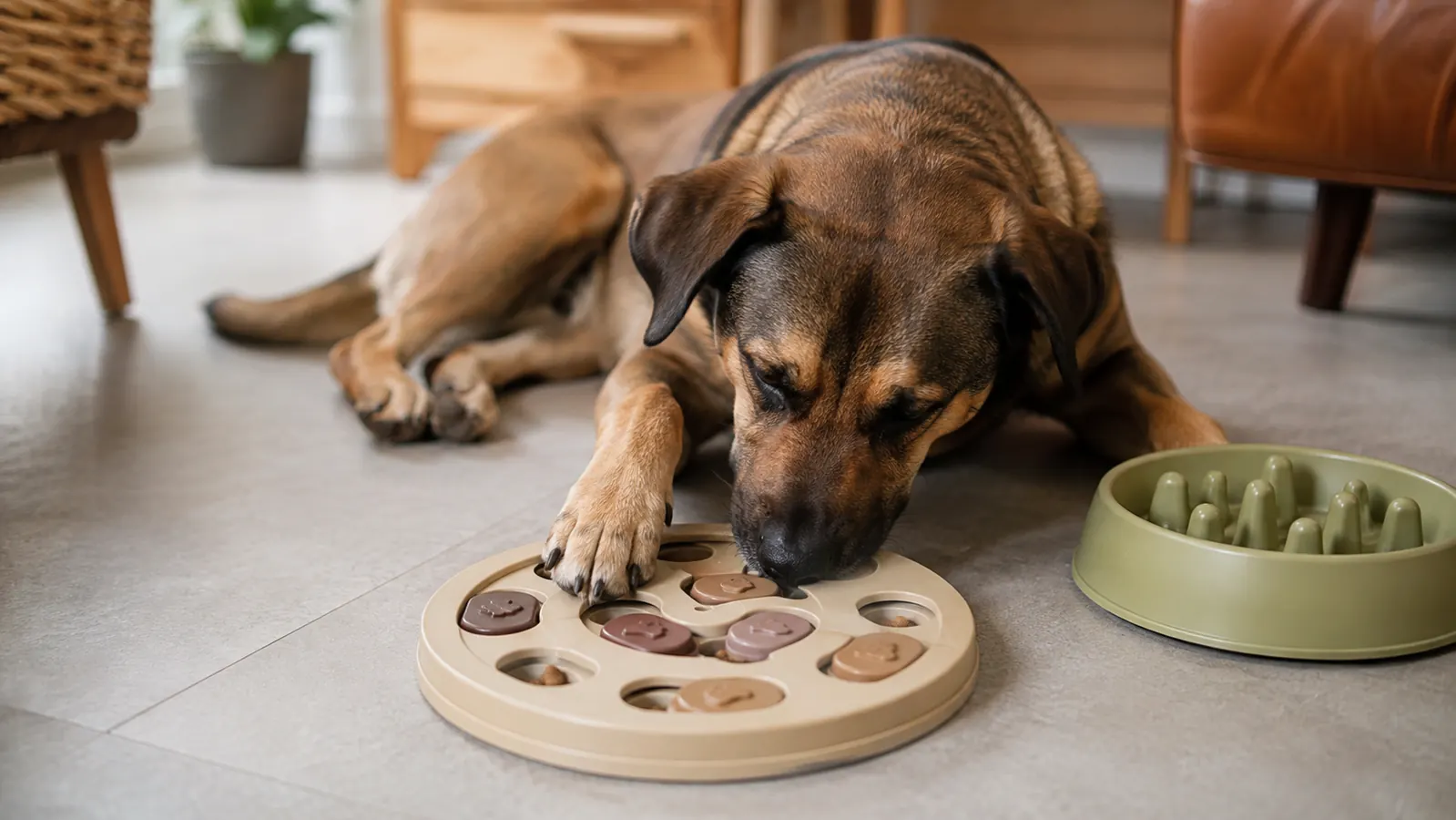
Be honest about the other side: a puzzle feeder is far better at mental stimulation. The bowl slows eating, but it does not make a dog think. A puzzle hides food under a sliding cover that the nose or paw has to move, and the session turns into actual problem solving. For a dog that is bored, destructive, or just needs something to do, that brain work is the whole point, and a puzzle delivers it where the bowl never will. If your dog's issue is energy with nowhere to go rather than dinner disappearing, the bowl is not going to help with that.
Puzzles also make a portion last a lot longer when the goal is occupying the dog rather than slowing a meal. You can scatter half a handful of treats into a puzzle and get ten to fifteen minutes of quiet activity, which makes it a strong tool for a dog that tears around the house at five in the afternoon. And for a meal, a puzzle can stretch time even further than a bowl, because the dog is not just slowed, it is deciding how to get each bit out. If your dog finishes the maze bowl too fast even after the slowdown, that is the signal that a puzzle is the next step up.
The slow feeder bowl kept dinner at six to eight minutes on a dog that used to finish in thirty seconds. The puzzle fed the brain, not just the habit. Most of us need the bowl first.
The Tradeoff Nobody Mentions
The honest tradeoff is that a puzzle does not slow a determined eater the way a bowl does, and it does not clean up the way a bowl does either. A dog that really wants food can often upend a light puzzle, tip the covers, or just shred through the easy pieces and leave the hard ones. The more effective the puzzle is at slowing a dog, the more moving parts it seems to have, and the more moving parts it has, the worse it is to wash. You end up trading the cleanup problem of the bowl for a different kind of cleanup problem with the puzzle.
There is also the cost reality. A good puzzle feeder usually costs as much or more than a single bowl on its own, and you may need more than one difficulty level as a smart dog figures each puzzle out. The MateeyLife two-pack puts two solid slow feeders in front of you for the price where a single puzzle often starts. For the everyday job of slowing a gulper, that arithmetic is hard to argue with.
Who Should Buy Which
Buy the MateeyLife slow feeder bowl if your dog gulps kibble at every meal and you want one simple, dishwasher-safe fix that works with zero training. It is the better everyday value, it cleans up in seconds, and it serves the picky and the older dog better because it never asks them to work harder than a normal meal. You also get two bowls, so there is a spare for a second dog, a slow-water option, or the travel bag.
Buy a puzzle feeder instead, or in addition, if your dog eats at a normal speed but is bored, destructive, or needs an outlet. That is the job a puzzle is genuinely good at, and it is the one thing a bowl cannot do. The honest answer for most fast-eating households is that the bowl handles dinner and a puzzle handles the boredom that shows up between meals. They are not really rivals; they are two different tools, and you probably need the bowl first and a puzzle second if you need a puzzle at all.
A note on the health angle: gulping air while eating fast is a real reason people switch, but I am not a vet and this is not medical advice. If your dog gulps, vomits after meals, bloats, or seems uncomfortable after eating, talk to your vet about the right feeding plan rather than relying on a piece of kit alone. A slow feeder is a practical feeding tool, not a treatment, and it will not fix a medical cause of fast or distressed eating.
The two tools answer different questions, and getting that straight decides which one belongs in your kitchen. A maze slow feeder exists to make one specific meal slower and more deliberate, to stop a fast eater from vacuuming kibble and gulping air. It does not ask much of the dog beyond persistence, and that is the point of it for a household where dinner is a race.
A puzzle feeder is the opposite trade. It occupies a smart dog, turns dinner into a genuine problem to solve, and buys real quiet time, but it is a bigger commitment to clean and to supervise, and a clever dog can beat it fast and then be bored again. If your only problem is speed, the slow feeder is the simpler, cheaper fix. If you want a dog that has to think at every meal, the puzzle is the better spend.
If you feed a normal portion and speed is the whole problem, the slow feeder is the cheaper fix and the easier one to keep using every day.
Start with the bowl that slows every meal
Before you collect a shelf of puzzle toys, try the MateeyLife 2-pack slow feeder for its price, its dishwasher-safe cleanup, and the calm it brings to dinnertime. If your dog is honestly bored rather than fast, you will know soon enough and can add a puzzle then.
Amazon Check Today's Price on Amazon →