
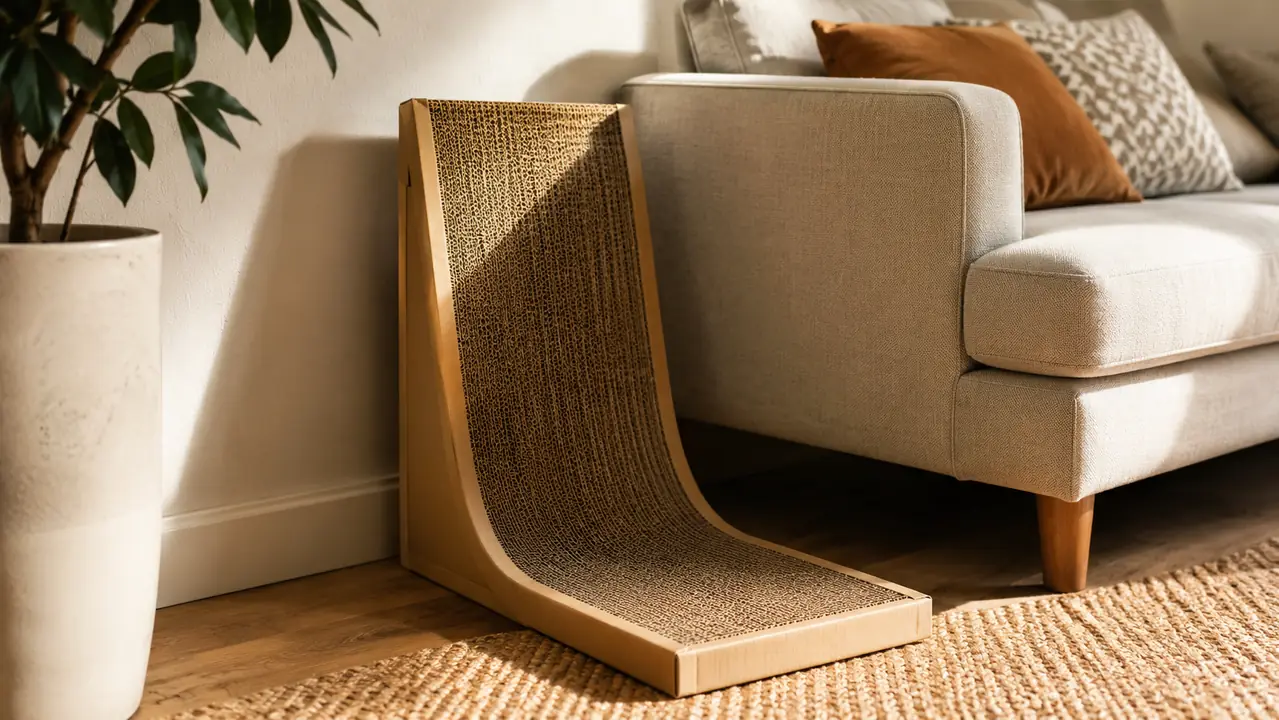
If you have a cat that has decided the arm of the sofa is a scratching post, you have probably looked at a rack of cardboard pads and wondered which one is actually worth the money. I have spent years living with a very motivated indoor cat, and I have gone through more of these L-shaped cardboard scratchers than I can count. So let me settle it in one line: the FUKUMARU cat scratcher is the big, sturdy choice for a dedicated scratch spot, and the MECOOL is the cheaper, smaller one that does the same basic job in a tighter footprint. They are closer than most comparisons admit, but the difference shows up in the details.
What separates one pad from another is size, the density of the cardboard, and the little extras, like a dangling ball, that make a cat choose the pad over the couch. Those are the things I zeroed in on, because they decide whether a pad gets used or becomes an expensive piece of decor in a corner.
Before the table, one thing worth saying plainly: I am not going to pretend one of these is a bad product, because neither is. Both are real cardboard scratchers that a cat will use, and both sit on Amazon with thousands of ratings for a reason. The differences are about fit. Size, density, the ball, the footprint. Everything below is about matching the right pad to the cat and the room you have, not about dismissing one brand to sell the other. If you already know you need a small pad in a tight spot, the MECOOL is a perfectly good answer, and I will say so plainly rather than bury it.
What Actually Gets a Cat to Scratch Cardboard
It helps to know why cats scrape in the first place, because every comparison below rests on it. Scratching is not mischief and it is not about sharpening claws the way people assume. Cats scratch to mark territory with the glands in their paws, to stretch the muscles of the back and shoulders, and to remove the worn outer layer of the claw. That is why they return to the same spot over and over, and why they will destroy a fabric sofa but ignore a hard wooden table. They want something that shreds and gives satisfying resistance.
Corrugated cardboard fits that perfectly, which is why cardboard pads are so popular. The layers shred as the claw pulls through, leaving the visible marks and loose fibers a cat finds so satisfying, and the edge of the pad is just at the height a cat wants to claw at. The result is that most healthy, normal cats take to a well-placed cardboard pad within days, often within hours. Your job is not to train instinct out of a cat. Your job is to give the instinct a better target than your furniture.
| FUKUMARU Cat Scratcher | MECOOL Cat Scratcher | |
|---|---|---|
| Scratching surface | Large L-shape, about 26.8 inches across, room to stretch full body and claw wide | More compact pad, fine for a quick scratch but less room to fully stretch |
| Cardboard density | Thick, tight corrugation that holds up to weeks of daily use before it flattens | Workable board, but it settles and sheds sooner under an eager clawer |
| Footprint | Takes up meaningful floor or wall space, needs a spot where it fits | Smaller and lighter, tucks into a corner or beside a doorway easily |
| Built-in toy | Comes with a dangling ball, a real pull for a playful cat | Usually no attached toy, you have to supply your own temptation |
| Portability | Hefty, you park it somewhere and it stays | Light, easy to move room to room or into a sunny window |
| Best for | A dedicated scratch station you want to last and hold a full stretch | A budget stopgap, a second pad, or a strict space problem |
The bigger pad that actually stops the sofa scraping
If the furniture keeps losing and you have the room, the FUKUMARU L-shaped pad gives your cat a full stretch and a built-in ball, which is exactly the combination that wins a cat over. Today's price is reasonable for how long the cardboard holds up.
Amazon Check Today's Price on Amazon →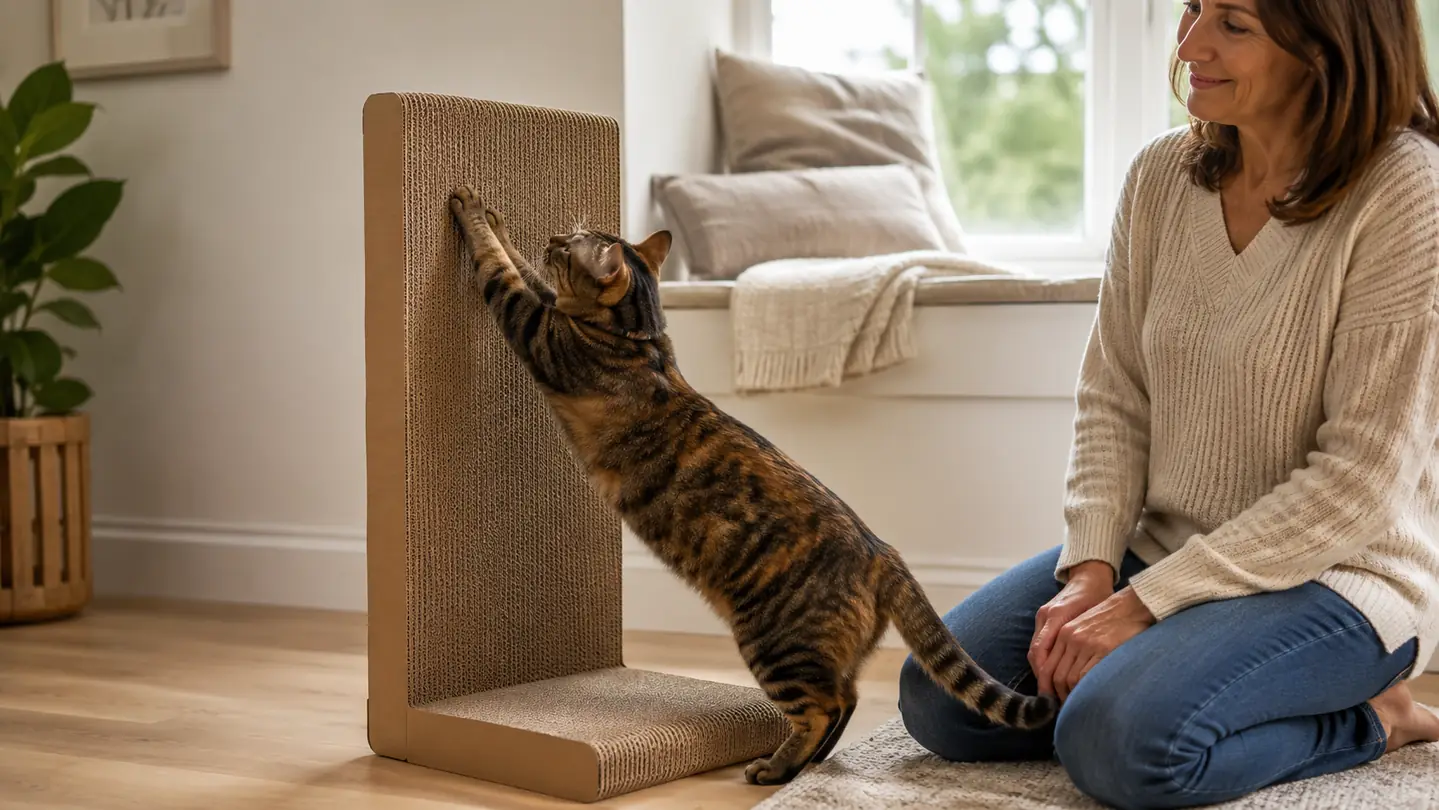
How I Compared Them
I ran both pads side by side in the same rooms for weeks, with the same motivated indoor cat, and I watched a few concrete things. First, which pad got scratched on its own, without me placing the cat on it or waving a toy at it. A scratcher that needs you to demonstrate it every day is not doing its job. Second, how the cardboard held up: how long before the surface flattened, shed heavy fibers, or lost its appeal. Third, the little details, like whether the ball stayed attached and whether the pad stayed standing or slid around the floor.
What I found was less dramatic than the marketing. Both pads got used, because both sit on the floor with an irresistible corrugated edge, and any cat that already scrapes furniture will usually adopt a cardboard pad quickly. But the FUKUMARU got used more, more often, and for longer. The size is the reason. A cat that likes to stretch fully, dig in deep, and lean its whole weight in will pick the bigger surface every time, and the L-shape gives it two working panels to claw rather than one. The smaller MECOOL got scratched too, just less enthusiastically and less often.
Where the FUKUMARU Wins
The FUKUMARU wins on the two things that matter most for protecting furniture: size and cardboard quality. At about 26.8 inches across with its L-shape, it gives a cat enough room to fully stretch and rake, which is the behavior cats genuinely want. A compact pad can work, but a cat that likes to stretch its whole body will often abandon a small pad and go back to the sofa arm, because the sofa gives it the deep full-length pull it is hunting for. The bigger the satisfying scratch surface, the less reason a cat has to go looking for another one.
The cardboard itself is noticeably denser and tighter. Over weeks of daily use, the FUKUMARU surface stayed firm and kept producing those satisfying corrugated shreds long after a thinner pad would have flattened into a smooth, useless board. That lifespan matters, because the moment cardboard flattens, a cat stops using it, and you are back to buying another pad or losing more sofa. The FUKUMARU genuinely lasted longer before that point, which is the quiet reason its cost per week of use ends up lower than a cheaper pad you replace more often.
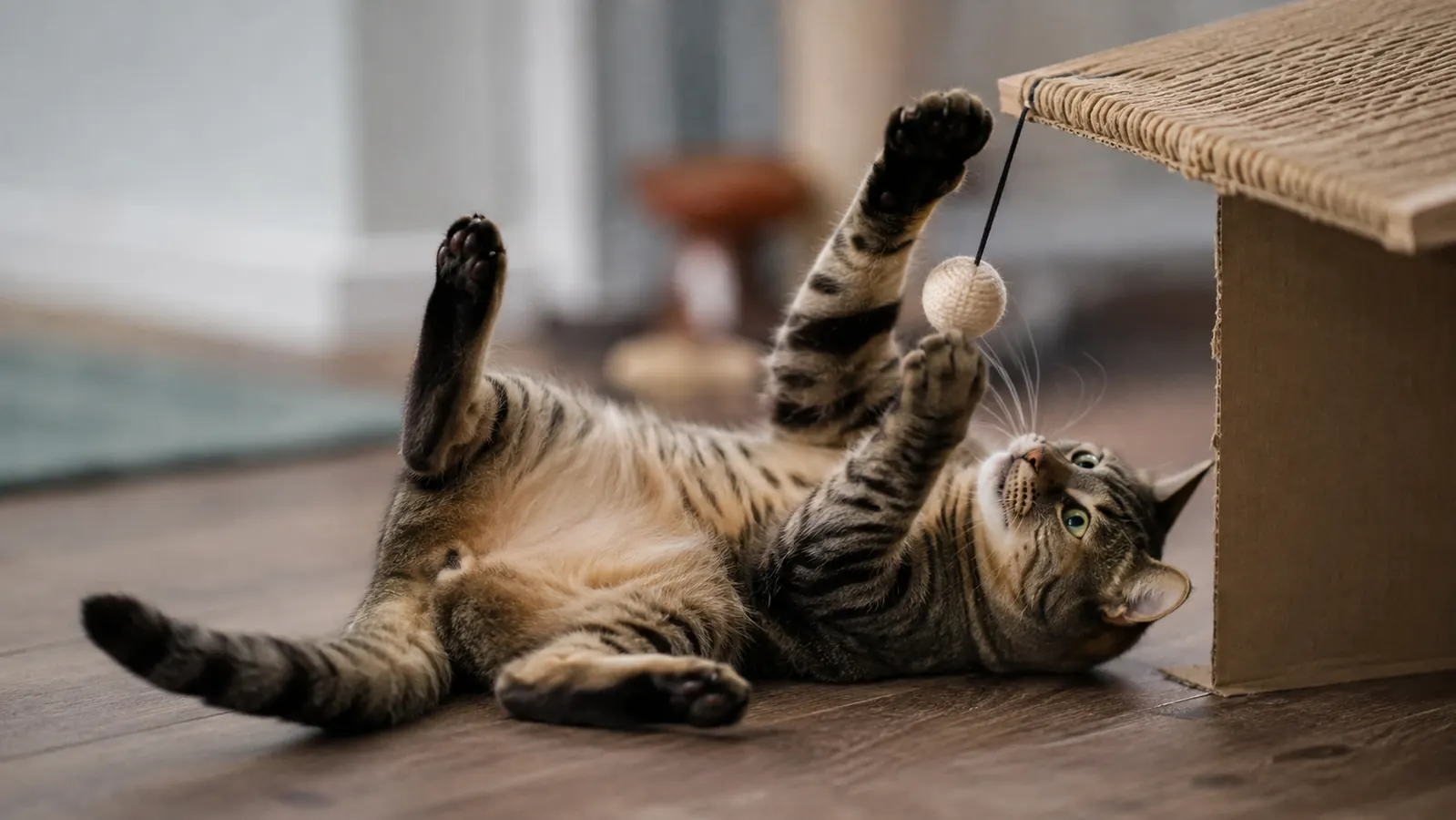
It also wins on the built-in dangling ball. That little ball is not a gimmick, at least not for a playful cat. The ball sits right at the corner where a cat's claws are already working, and the swipe at it while scratching turned into some of the longest sessions I watched. It turns a pure scratch stop into a scratch-and-play station, which means the cat spends more time at the right surface and less time eyeing the couch. For a skittish or one-and-done scraper, that extra pull is often what makes the pad stick.
Where the MECOOL Wins
Be honest about the other side. The MECOOL wins on footprint and price. It takes up a fraction of the space, and it is the kind of pad you can sit in a tight corner, beside a door, or in a spot where a big L-shaped board simply will not fit. If your apartment is small, or the only free floor is a sliver under a table, the smaller pad is the practical answer. A pad you can actually place somewhere useful beats a bigger pad you have no room for, and that is a real edge, not a consolation prize.
It is also the better option if you want a second pad or need to test whether your cat will even take to cardboard in the first place. The MECOOL costs less, so it is a sensible first try if you are not sure your cat is a cardboard cat at all. And because it is light, you can carry it from the living room to a sunny bedroom window and back without effort, following where the cat wants to be. Some cats will use a small pad placed exactly right more than they will use a big pad placed slightly wrong, and the MECOOL's portability makes finding that exact spot easier.
The bigger pad got scratched more, more often, and for longer, because it gave the cat a full stretch and a ball to swipe. The smaller one won on footprint and price. Most owners with the floor space will want the bigger FUKUMARU first.
The Tradeoff Nobody Mentions
The honest tradeoff is that any cardboard scratcher, including the FUKUMARU, is a consumable. It is not a piece of furniture you buy once. The whole appeal is that it shreds, and the whole cost is that it eventually shreds into nothing, leaving a layer of corrugated debris on your floor for the rest of the week. Cats love pulling cardboard to bits, which means you will be sweeping up little pieces regularly, and you will be buying a replacement pad down the line. If you hate cardboard debris, a sisal post or a sisal-wrapped scratcher might suit you better, at a higher price.
There is also a behavioral caveat that no scratch pad solves on its own. A pad only protects the furniture if the cat actually chooses it, and the placement and routine matter as much as the product. A cat will not necessarily stop scratching the couch just because a pad exists three feet away. You usually have to steer the cat to the pad for the first few sessions, reward the use, and sometimes put the pad right in front of the spot the cat already favors. Buy the pad expecting to do a little of that work, and it will pay off. Expect the pad to do all of it alone, and you may be disappointed.
Who Should Buy Which
Buy the FUKUMARU cat scratcher if you have the floor space and a cat that scrapes furniture, especially a cat that likes to stretch fully or is playful. Its bigger surface, denser cardboard, and attached ball make it more likely to actually be used and to keep working longer, which is what saves the sofa. It is the better choice for a main, permanent scratch station, and the cost per week of use tends to be lower because it lasts.
Buy the MECOOL instead if space is genuinely tight, if you want a cheap second pad, or if you are not sure your cat will take to cardboard and want to test it cheaply first. It does the same basic job in a smaller footprint for less money, and its portability makes it easy to place wherever the cat actually goes. For most households with room for the bigger board, the FUKUMARU is the better first purchase, and the MECOOL is the sensible second pad or starter.
The practical edge of the upright L-shaped cardboard design is that it matches how many cats already scratch, reaching up and claiming corners, and it is cheap to refresh when a section finally wears out. If your cat is a tall vertical scratcher that claims corners, the FUKUMARU fits. If your cat only ever scratches flat surfaces on the floor, the alternative is the better match. Neither choice is wrong; the right call depends entirely on the cat in front of you.
The L-shaped pad that gives your cat a full stretch
If you have the floor space, the FUKUMARU cat scratcher is the one more likely to get used and to last, with a built-in ball to keep a playful cat coming back. It is a reasonable price for a scratch station that actually protects the furniture, and there is a review trail of thousands behind it.
Amazon Check Today's Price on Amazon →