

If you live with a double-coated dog, you know the feeling of vacuuming, dusting, and wiping in mid-air for an hour, then looking at the couch and wondering if you actually did anything. The loose undercoat does not fall out all at once. It works its way out in a slow, steady drift that lands on every surface you own. I have spent years trying to get ahead of that drift, and for a long time I was only trading one kind of mess for another.
The Maxpower Planet grooming rake is the tool that finally changed that for me. It is a cheap, double-sided rake with a huge following, over 59,000 ratings at the last count, and it has a simple job: reach down into the undercoat, pull the dead hair out in one session, and leave less of it to end up on the furniture. I tested it through a full shedding season on some of the heaviest coats I have come across. This is the long version of what happened.
The Quick Verdict
For a modest price it does the one thing you need it to do: remove a startling amount of loose undercoat in a single pass, so the hair ends up in a pile instead of on the floor.
Amazon Check Today's Price →The rake that pulls a season's worth of undercoat out of a double coat
If you are tired of finding your dog's fur on every shirt, chair, and carpet in the house, this is the cheapest real fix I have found. It is one tool, easy on the budget, and it does the job.
Amazon Check Today's Price on Amazon →How I've Used It
I test grooming tools the way most people use them, not the way a groomer with a table and a stand dryer would. I used it on dogs with dense double coats that were shedding hard, outside on the porch so the loose fur had somewhere to go. I raked once a week through the peak of shedding season, and then stretched it to every couple of weeks once things settled down.
I paid attention to the things that actually matter over months of use: how much hair each stroke lifts, whether the rake snags or scratches a dog that is not being patient, how it feels in the hand after a twenty minute session, and whether it holds up to being dropped, washed, and used over and over. I also kept an eye on the dogs themselves, because no tool is worth anything if the animal dreads it.
One honest note before I go further. My background here is years of hands-on pet care, not a veterinary one. If your dog is losing hair in patches, scratching more than usual, or developing any kind of skin irritation, stop with the grooming tools and ask a vet. This review is about normal seasonal shedding on a healthy coat only.
What Makes a Rake Different From a Brush
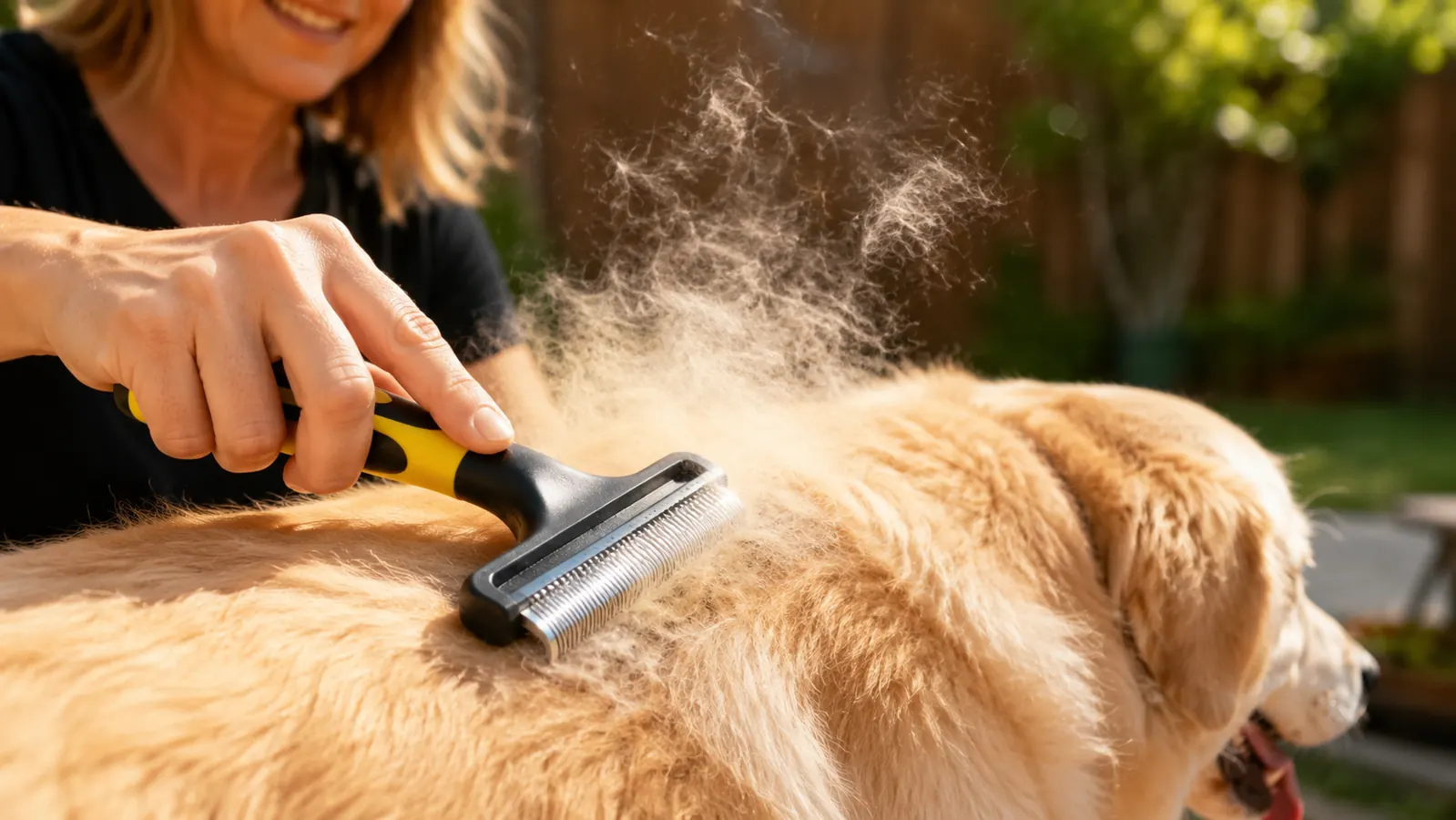
A regular brush works on the top layer of the coat. It smooths and glows the guard hairs, and it picks up whatever loose fur is already sitting on the surface. But a lot of the shedding you are dealing with is undercoat, the soft, dense layer underneath that insulates a dog in winter and then needs to go in spring. That layer sits deeper, and a regular brush barely touches it.
The Maxpower rake has teeth that are spaced out just enough to push through the topcoat and dig down into that undercoat. One long, steady stroke pulls a mat of loose fur up and out, and you can see it lift away from the body in a way that no normal bristle brush achieves. That takes care of the deepest source of the shed instead of waiting for it to surface on its own.
It is extra wide, which means each stroke covers a bigger patch of the dog's back than most rakes. On a large dog that cuts a whole session down noticeably. The double-sided head gives you one set of teeth for the body and a finer side for the tricky spots like the legs, tail, and behind the ears, so you are not constantly switching tools.
The first real pass with the Maxpower lifted more loose undercoat than I had pulled with a regular brush in a month of trying.
How Much Hair It Actually Removes
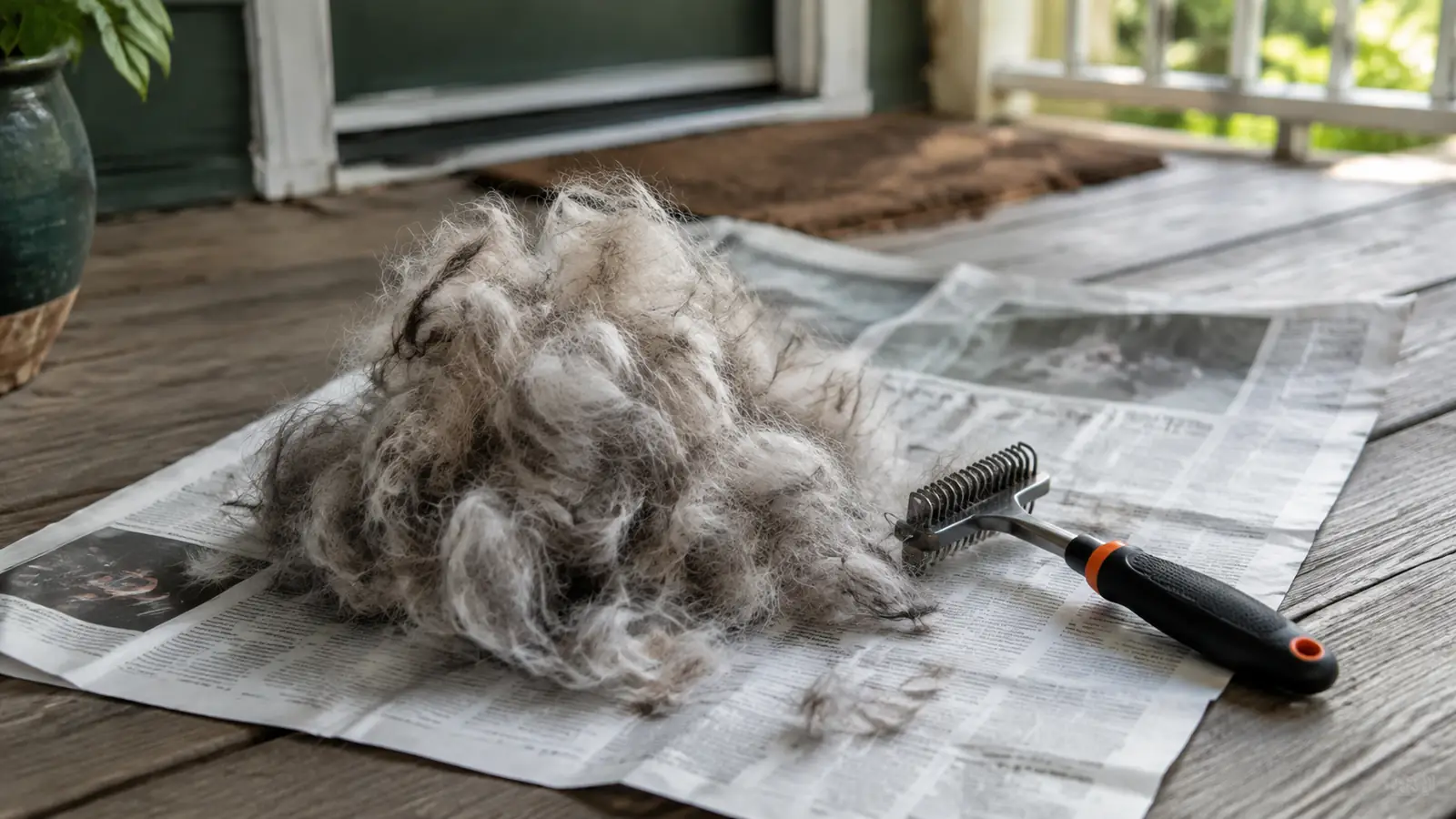
This is the part that surprised me most. The first full session on a heavy shedder produced a loose pile I could have almost filled a small grocery bag with. That is not an exaggeration, and it is the single biggest reason the tool works. When that undercoat is already dead and loose, you are not fighting your dog to pull out good hair. You are lifting out hair that was going to end up on your floor anyway, one week at a time.
The difference showed up in the house, not just in the pile on the porch. For the few days after a good raking session, the amount of fur floating around dropped noticeably. The hairy corners of the room stayed cleaner longer, and I was not re-vacuuming the same patch of carpet every single day. That is the real payoff, and it is why I kept coming back to this tool week after week.
I will say the results depend heavily on the coat. On a dog with a thick double coat in full shed, this rake is brilliant. On a dog with a short, single coat that does not really have an undercoat, it does much less, and you might be better off with a simple de-shedding brush. Match the tool to the coat and it earns its place in the drawer quickly.
Comfort and Safety While Raking
The question everyone has with a raking tool is whether it hurts the dog. The honest answer is that it depends on your technique, not the tool. The Maxpower rake does not have a built-in blade like some fancier de-shedding tools do, and that is actually a point in its favor for nervous dogs. It rakes rather than cuts, so when you use light, steady pressure you are not scraping skin.
The grip is comfortable enough for a long session, and the wide head means fewer total strokes, which helps on a dog with a short patience span. I found myself reaching for the finer side on the legs and face area where the coat is thinner, and using the wider side on the back and haunches where the undercoat is thickest. The two sides mean you can stay gentle where the dog is sensitive.
If you are new to raking, go slow at first. Short, light strokes, watch how your dog reacts, and stop the moment they seem uncomfortable. Most dogs relax once they realize it feels good, but a dog with a sore spot or a mat problem is a different situation and is worth a vet or a groomer's look before you go digging in with any tool.
What I Liked
- Pulls an enormous amount of loose undercoat out in a single session
- Wide, double-sided head handles a big coat fast and reaches tricky spots
- Rakes rather than cuts, which is gentler for sensitive dogs
- Easy on the budget, well below the fancy name-brand de-shedders
- Simple to rinse clean after using it on the porch
- Works on thick double coats that a normal brush barely touches
Where It Falls Short
- Does little on short single coats with no real undercoat
- No blade, so it will not tackle severe matting the way a dematting tool will
- You have to rake outside or somewhere the loose fur can go
- The handle and teeth feel no frills, built to work rather than to look nice
- Results depend heavily on the right technique and the right coat
How It Holds Up Over Months
After six months of weekly use, the Maxpower rake is still going. The head stays attached, the teeth have not bent, and it still grabs undercoat the way it did on day one. Given the price, that durability is the pleasant surprise. I have broken more expensive grooming tools faster than this, mostly when a metal pin works its way loose and the head separates mid-stroke.
It rinses clean easily under the tap, which matters because raking a heavy shedder leaves the teeth packed with fur. Give it a rinse, let it dry, and it is ready for the next session. There is nothing delicate about it, which is exactly what a tool used on squirmy dogs needs to be.
How It Compares to the Fancy De-Shedders
The tool people most often ask about is the FURminator, which costs around three times as much and has a blade built into the head. I have used both, and the short version is that the Maxpower and the FURminator are not really doing the same job. The FURminator does a fine job on the top layer and leaves a very smooth finish. The Maxpower is built to dive into the undercoat and haul out the deep fur.
For the price, the Maxpower does the part that matters most for cutting the shed around your house. That has made it my default recommendation for someone who just wants less hair on the furniture without spending big money. I have written a fuller head-to-head of the two tools if you want the details before you decide.
A Few Technique Notes That Go a Long Way
The tool matters, but technique is what decides whether you enjoy raking or dread it. I work one section at a time instead of sweeping the whole dog in a random order. I start behind the shoulders, where the undercoat is thickest, and stroke in the direction the fur grows. A smooth, steady stroke pulls out far more than a short, choppy jabbing motion, and it is easier on the dog too.
I do not press hard. The teeth are long enough to reach the undercoat on their own, and pushing down only makes the rake scrape skin and turns the whole session into a fight. If I feel resistance, I ease up rather than force it. And on a dog that gets fidgety, I keep each session short and end on a good experience, so the next time they are not bracing for it. Ten calm minutes a week beats forty miserable ones a month.
I also time my raking around when the coat is loosest. Right after a heavy shed kicks off, or just before the undercoat starts to clump, a rake does its best work. If you wait until the shed has fully taken hold, the dead fur is brittle and flies everywhere as you work. Stay slightly ahead of it and the pile stays in one place, which makes cleanup a fraction of the job.
Who This Is For
Buy the Maxpower Planet rake if you live with a double-coated dog, a husky, a shepherd, a retriever, a collie, or any breed that blows its coat once or twice a year. If you have ever looked at a drift of undercoat on your floor and wished there was a way to skip the month of chaos, this is the tool. It is also a great first grooming rake for anyone who does not want to spend much to find out if raking works for their dog. At this price you can find out for under ten.
Who Should Skip It
Skip it if you have a short-haired dog with a single coat and no real undercoat, because there is simply not enough deep fur here for a rake to grab onto. Skip it if your dog has severe matting or a skin problem, because those need a groomer or a vet, not a home rake. And if your dog is genuinely scared of being groomed, no tool will fix that until you work on the fear first. This rake is a shed solution, not a cure-all.
The honest way to judge any grooming tool is over a full season, not one session. A rake shows its worth in the weeks that follow a good pass, when the pile on the floor stays small and the furniture stops collecting a fresh layer every day. On a double coat that blows twice a year, that patience pays for itself by the second week alone.
It is also worth saying that no rake is a cure for shedding. A double-coated dog is going to shed, and the goal is not to stop it but to collect it in one place on your schedule. Get the loose undercoat out before it can land, go with the grain, stay gentle where the skin is thin, and you stop being at war with your couch and start being on a routine.
Stop fighting the shed one day at a time
One good raking session a week beats a month of daily sweeping. The Maxpower Planet rake is the cheapest way I have found to get the loose undercoat out before it ends up on your couch.
Amazon Check Today's Price on Amazon →