
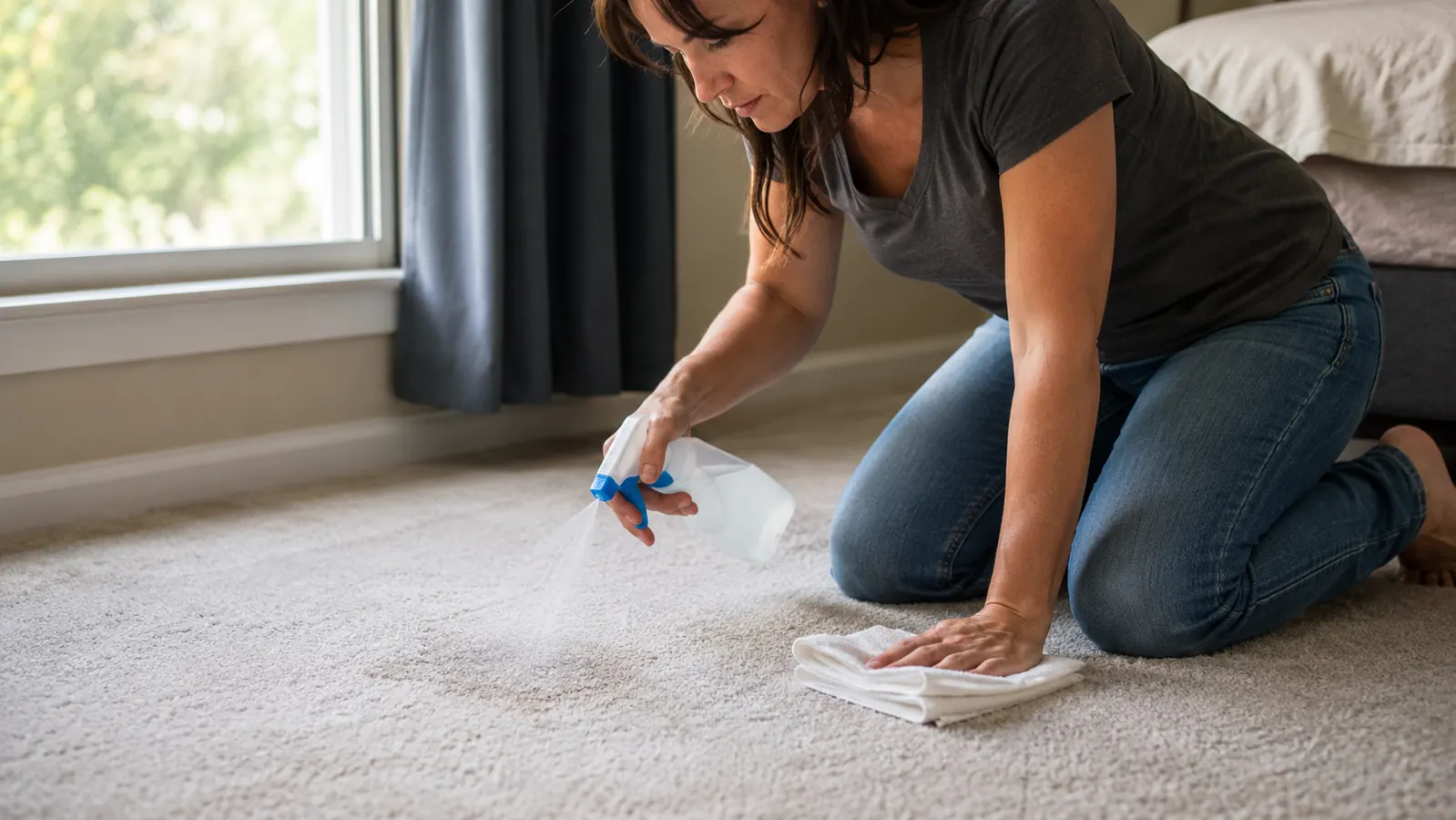
Sooner or later every dog owner stands over a patch of carpet with a bottle of spray in one hand and a growing sense of doubt in the other. You scrub. It looks clean. It even smells clean for a day. Then a warm afternoon rolls in and the smell is back, and so is the dog, sniffing that exact spot and lifting a leg to go again. If you have been through this loop, you already know it feels like losing a fight to invisible chemistry.
The reason has nothing to do with how hard you scrubbed, and that is why a bottle like Rocco & Roxie's Stain & Odor Eliminator keeps showing up in my recommendation list. Plain soap and water wash away the wet stain your eyes can see, but they cannot reach the part of the urine that carries the odor deep in the fibers. A dog's nose has no trouble finding what yours cannot, and as long as that scent is still down there, the spot stays a magnet for repeat visits. An enzyme cleaner is built to do the job soap cannot: it breaks the urine down at the source instead of covering it up. Here is the method I've settled on after years of cleaning up after dogs, in the order that actually works.
The Enzyme Cleaner I Keep on the Shelf for This Exact Cycle
For fresh messes, set-in stains, and the repeat-offender spots, I reach for Rocco & Roxie's Stain & Odor Eliminator. It has carried over a hundred thousand reviews, it is certified safe around pets, and it does not just mask the smell, it eats the source.
Amazon Check Today's Price on Amazon →Step 1: Get to it fast and blot, never rub
The minute you find a fresh accident, you are racing the clock. Urine soaks down into carpet padding the longer it sits, and once it is down there, surface spray alone may never reach it. Blot with dry paper towels or an old cloth and press down hard to pull up as much liquid as you can. Keep swapping to a dry towel instead of pressing with a soaked one, because a wet towel stops absorbing and just moves the mess around.
Do not rub. Rubbing pushes the liquid deeper into the fibers and spreads it into a bigger circle than the dog actually made, which just gives you a larger spot to fix. Press straight down, replace the towel, and keep going until a fresh towel comes up mostly dry. You are not cleaning here, you are removing as much of the urine as you can before the cleaner takes over.
Speed matters more than anything you do later. A mess you reach in the first few minutes is an easy job. The same mess left for a night is a different category of problem, and the steps below get longer because of it. The ten minutes you spend blotting well at the start can save you two hours of repeat work a week from now.
Step 2: Saturate the spot, not just the surface
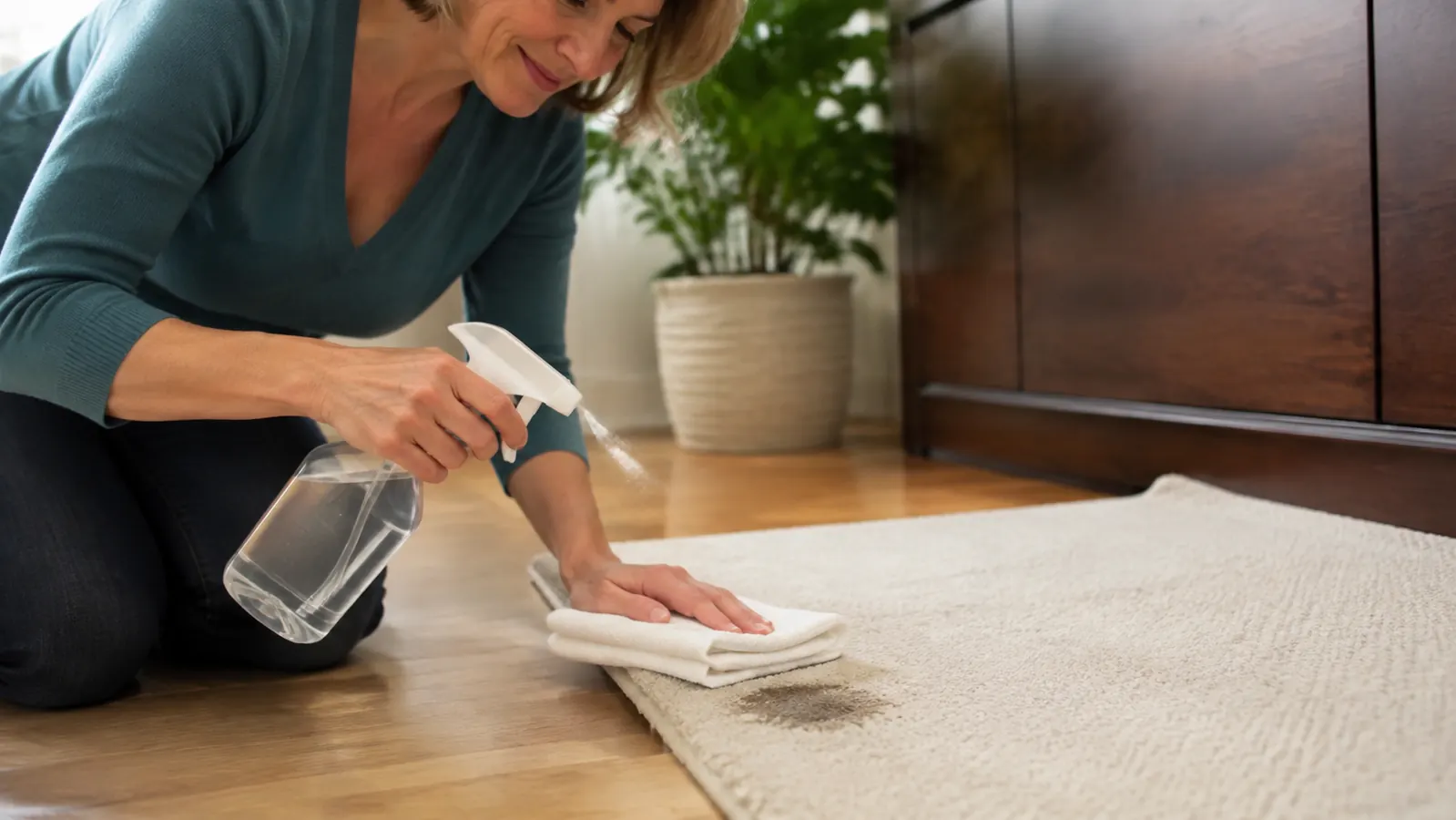
This is the step most people get wrong, and it is why the smell keeps coming back. A quick mist over the top of the carpet touches only the surface fibers. The odor is down in the backing and the padding, so that is where the enzyme has to reach. Saturate the spot so the cleaner soaks all the way through, enough that it visibly wets the carpet rather than just dampens it.
With a bottle like Rocco & Roxie, shake it well first, then work the nozzle in a generous layer over and slightly beyond the visible stain. If the carpet sits over padding and you are worried about soaking through, place a dry towel underneath or press it down with something to give the liquid time to work. The enzyme needs to reach the deepest layer the urine touched, or the bottom of the stain simply stays alive and keeps signaling to the dog.
Resist the urge to economize here. The amount of cleaner that lands on the surface is not what fixes the smell, the amount that soaks down to the source is. Better to use a little more than a little less and have to repeat the whole job. A half-empty bottle that did nothing is a worse outcome than a half-used bottle that fixed the spot.
Step 3: Let it dry slowly and ignore it while it works
An enzyme cleaner earns its name by working while it is wet and warm. The enzymes need time and moisture to break down the urea and the odor compounds, so the worst thing you can do is blot it dry immediately or hit the spot with a steamer that kills the enzyme before it finishes. Let the area air dry on its own, which can take several hours to fully dry on a padded carpet.
Keep the dog away from the spot while it dries. A wet patch full of cleaner smells interesting to them, and a dog that wants to re-mark will do it on the dampest spot in the room. If you cannot keep them out of the room, cover the area with a flipped chair or a plastic bin until it is dry.
This waiting step is the one that separates people who fix the problem from people who repeat it. The smell does not go away because you wiped the surface, it goes away because the enzymes were given hours to do the work down in the fibers. Plan the job around that drying window, ideally at the end of the day when you can leave the room alone until morning.
The same soak-and-wait rule transfers to surfaces that are not carpet. Urine on tile or a sealed floor still seeps into grout lines and the gap at the baseboard, places a regular mop never truly reaches. For those spots, follow the exact same sequence, wet it thoroughly with the enzyme, give it time, and rinse the residue off after it dries.
Step 4: Go back for set-in and old spots
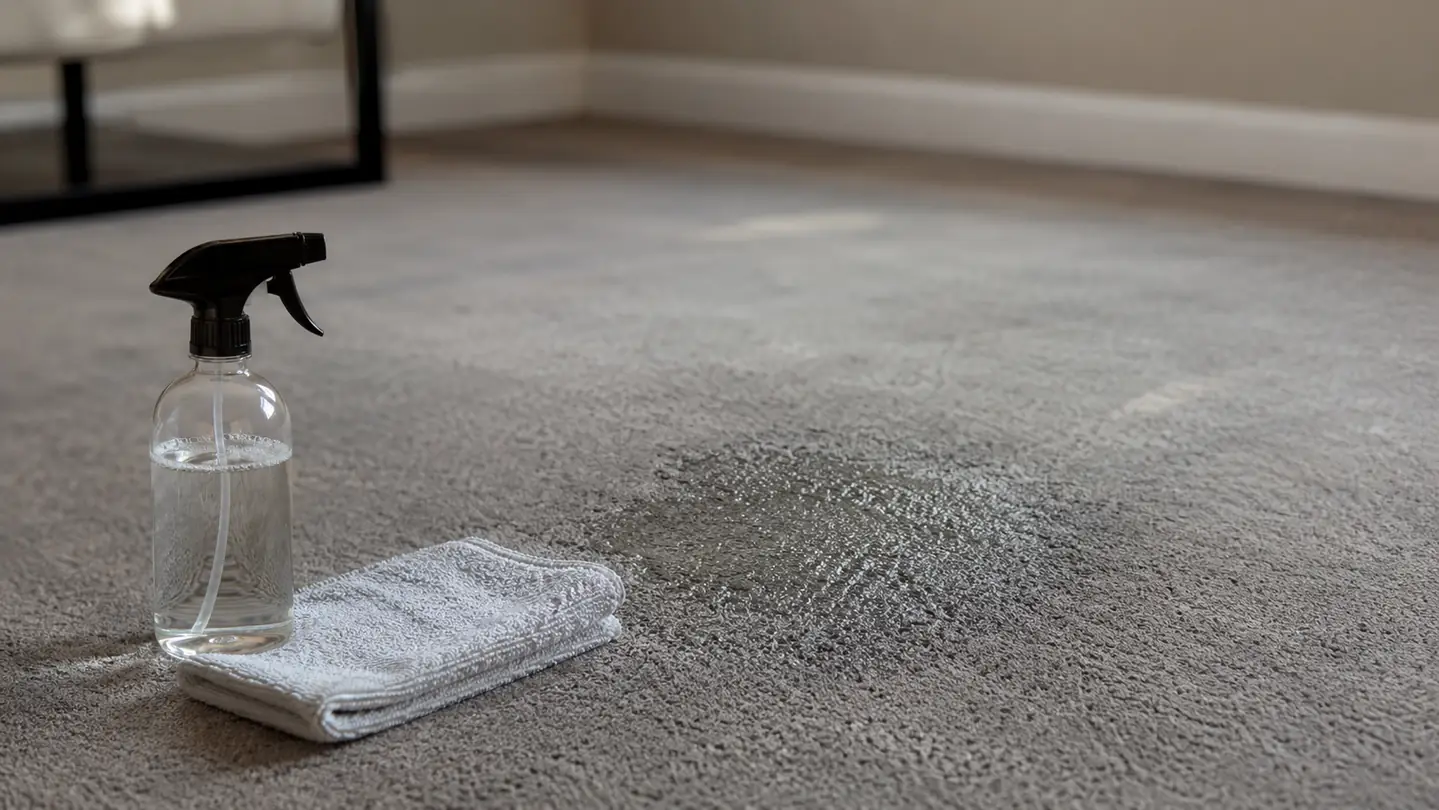
An old, set-in stain that has dried and been scrubbed by everything before you got to it is stubborn, and it rarely surrenders to one pass. The good news is that the same enzyme cleaner is your best tool for these, it just takes more patience. Saturate the old spot the same way, let it dry fully, and repeat. Several passes over a few days will strip away layers that a single soak cannot touch.
For heavy, long-set messes, one trick worth adding is a rinse after drying. Wipe the now-clean carpet with clean water to wash away any enzyme residue, blot, and let it dry again. A mat or a scatter rug over the spot for a few days gives you a chance to see whether the odor actually stays gone rather than fading and returning. Some spots look solved for two days and then surface again, and the rinse step catches that.
If an old stain honestly will not lift no matter how many passes you run, rent or borrow a proper carpet extractor for that one spot. A good extraction machine pulls the dissolved mess out of the padding in a way a spray bottle alone cannot, and it makes the enzyme's job much easier on the follow-up pass. It is worth the rental fee for a spot that has been costing you all along.
Step 5: Break the repeat-offender cycle, or know when to call a vet
The deepest win of a proper enzyme clean is that it takes away the scent that tells a dog this is the bathroom. Once the spot carries no trace of urine, most dogs simply lose interest and stop going back to it. That is the whole point of doing the job right instead of masking it, and it is the part of using Rocco & Roxie (or any true enzyme cleaner) that a citrus-scented general disinfectant never offers.
But if the same dog keeps having accidents in the house, especially an adult dog that is otherwise housetrained, stop defaulting to cleaning products and think about the cause. Frequent accidents can point to a medical problem, and that is a conversation for a veterinarian, not a spray bottle. Clean up the mess every time, by all means, but a dog that is suddenly or repeatedly breaking training deserves a vet visit well before you buy a second bottle.
What Else Helps
An enzyme cleaner does the heavy lifting, but it works better alongside a couple of habits. Keep the spray in an easy spot near where accidents happen so you can reach it in the first minute instead of hunting for it after the smell sets in. Toss washable bedding and soft toys in with an enzyme wash cycle now and again, because a dog bed soaked with invisible urine keeps telling the dog it is the bathroom even after the carpet is clean. Keep a small stack of old towels set aside for pet messes too, so you never end up blotting with your good bath towels.
And take a hard look at the routine. A dog that cannot hold it through the night, or gets let out on an irregular schedule, will keep having accidents no cleaner can fully explain away. More frequent, reliable bathroom breaks fix more urine problems than any product on the shelf. The cleaner handles the evidence, regular breaks handle the cause, and the two together are what actually ends the cycle.
One more habit worth building: treat every new stray puddle as Step 1 immediately rather than as a chore to get to later. The difference between a ten-minute blot-and-soak and a full repeat-offender campaign is usually twenty minutes of delay. Keep the tools within arm's reach and the habit will follow. And test any cleaner on a hidden corner of the fabric first, so a spot that was already a problem does not get a color shift as a bonus.
The amount of cleaner that lands on the surface is not what fixes the smell. The amount that soaks down to the source is.
The Bottom Line
If you only take one thing from all of this, take the soak-wait relationship. A little product, applied all the way down, given hours to work, and gone back for on the old spots, beats a whole bottle sprayed on the surface in a panic. That is the difference between a house that smells clean and one that actually is clean, and it is why repeat accidents stop. Whether this is your first bottle of the year or your third, the rhythm is the same.
Blot fast, saturate deep, let it dry, repeat on the stubborn ones, and keep the dog off it while it works. If the accidents keep coming no matter how clean the carpet gets, make the vet appointment. Between the routine and the right cleaner, the spot stops coming back, and so does the daily sniff test at the same patch of floor. Give the carpet a real check each morning for a few days until you trust it again.
One Bottle That Does the Whole Job
Rocco & Roxie's Stain & Odor Eliminator is the bottle I reach for across fresh accidents, set-in stains, and bedding. It is certified safe around pets, enzyme-based so it eats the odor instead of hiding it, and it has the review count to back it up.
Amazon Check Today's Price on Amazon →