
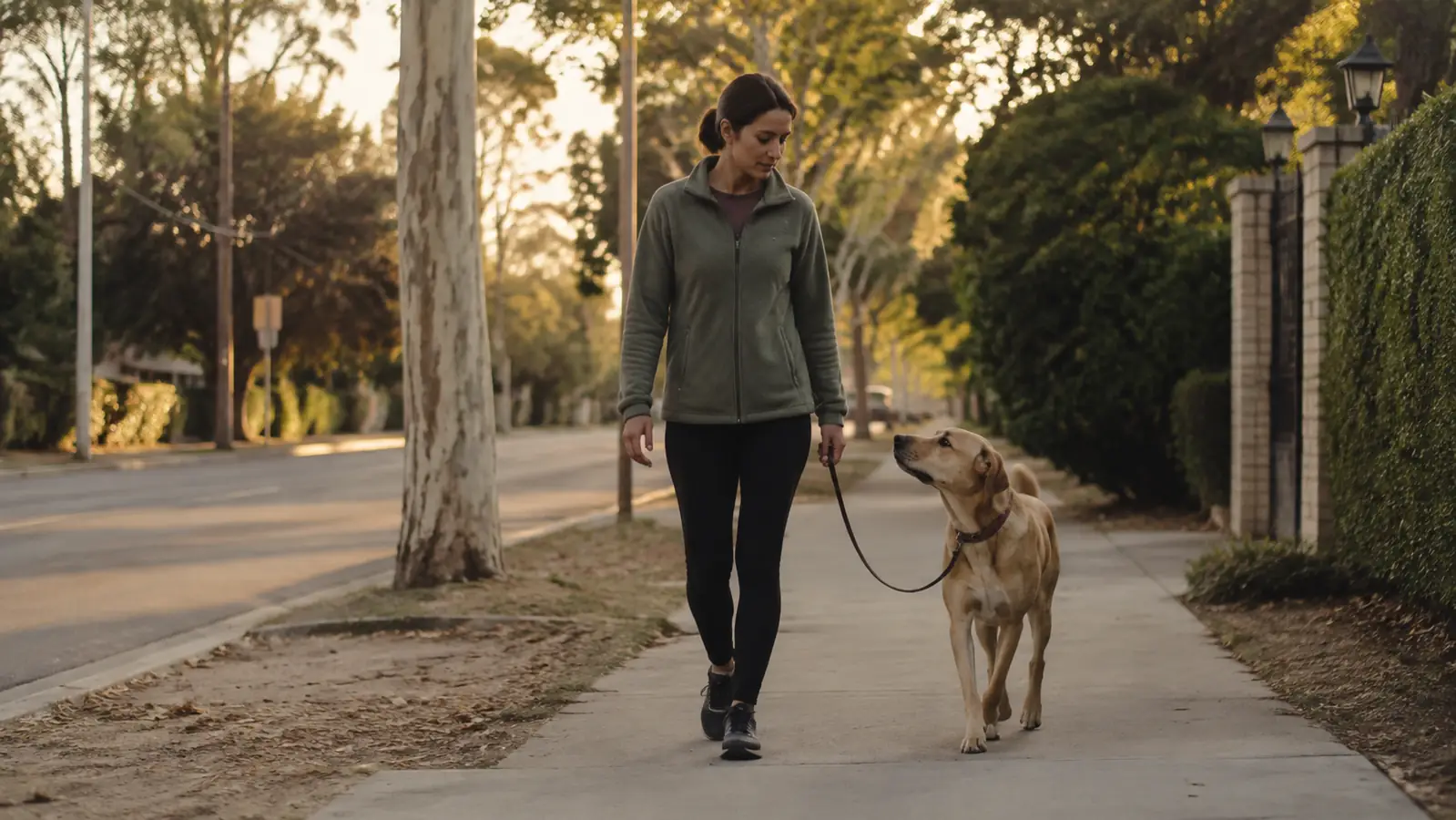
Switching to the rabbitgoo padded no-pull harness changed that whole routine. For a long stretch, every walk in our house had the same shape. The leash went tight in the first few steps, the dog leaned forward into it, and the rest of the walk was me bracing against a chest that outweighed my grip. By the time we got home my shoulder ached and the dog had barely burned off any energy. We were getting the mileage but none of the benefit.
The usual fixes did nothing useful. A shorter leash just made the pull sharper. A flat collar meant the lead sat right on the dog's throat, the last place you want pressure when the dog is already leaning. Treats worked for about two steps before a squirrel took over. I told myself this was simply how this dog walked.
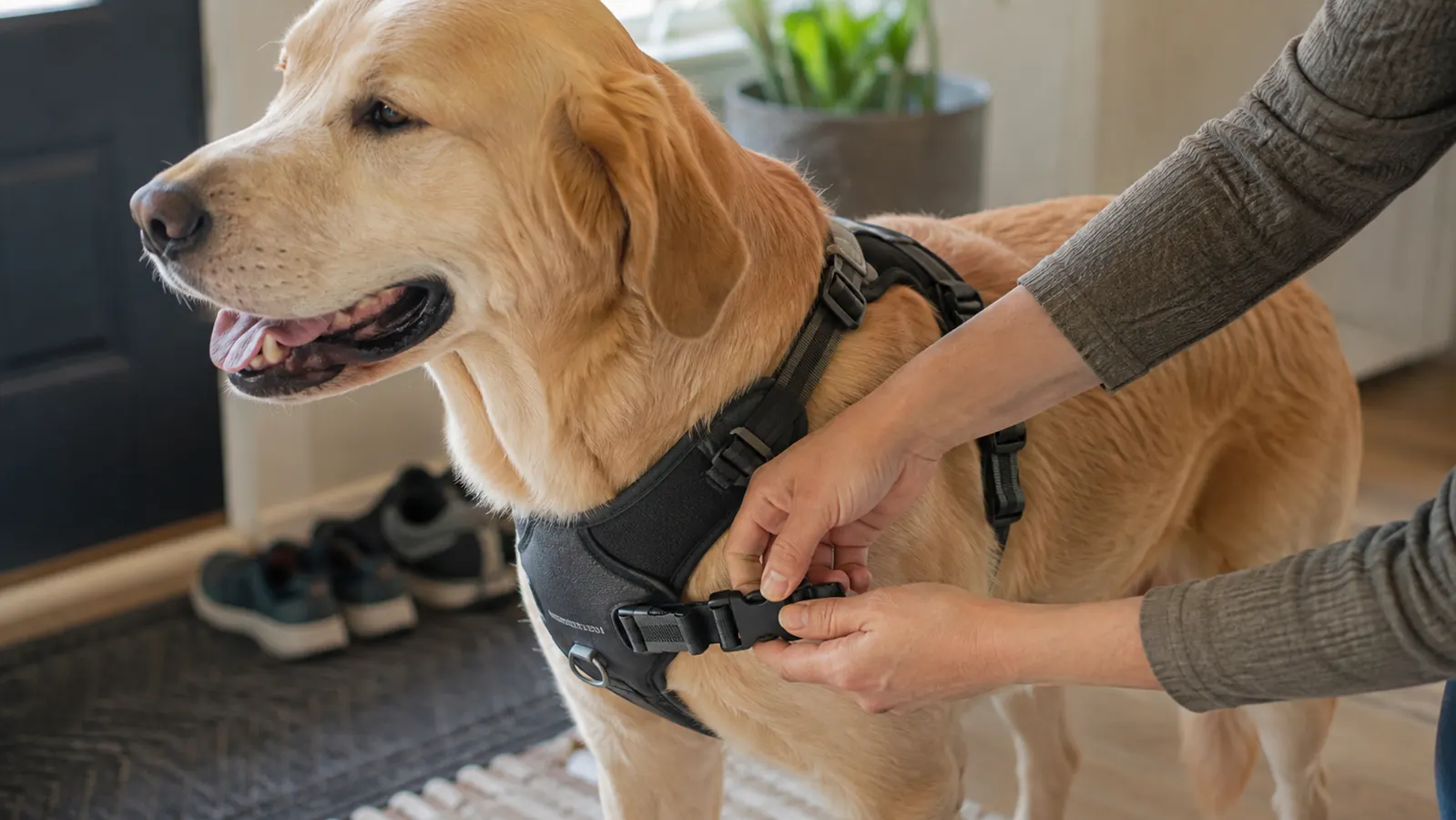
Then I saw what actually changed the picture. It was not a stronger grip or a louder heel command. It was where the leash attached. A harness with the clip on the chest, low and in front, turns a forward lean sideways. When the anchor point sits ahead of the shoulders, the dog simply does not have the same leverage to pull. That one detail changed the whole mechanics of the walk.
That is the idea behind the rabbitgoo no-pull harness. It carries the front clip, plus a second clip on the back for calm walking, and a handle up top that is handy near curbs or a curious dog. The chest and body are padded, the trim is reflective, and there is no choke point on the throat. The first day we used it, we finished a full loop without a single hard yank. I kept waiting for the old tension to come back, and it simply did not.
The change read in the dog first. When nothing pulls back, the animal stops bracing, and that is when you see why a loose-leash walk is a different conversation entirely. The head came up, the ears relaxed, and every few steps the dog glanced back, which is not something that happens when you are being towed. It took me a few days to stop gripping the handle like a handbrake. Somewhere in that first week the morning walk stopped being the part of the day I put off.
It was not a different dog. It was the same strong puller with an anchor point that finally worked, and that is the honest difference between a collar and a harness built for pullers.
Stop bracing against the leash every single walk
You do not need a stronger grip. You need the leash attached where the dog cannot get leverage. The rabbitgoo no-pull harness puts the clip on the chest, takes the pressure off the throat, and has a handle for the tight moments.
Amazon Check Today's Price on Amazon →The first week was not a miracle, and I want to be straight about that. A harness changes leverage, not habits. The dog still tried to charge an occasional squirrel, and the front clip did its job by swinging the shoulders around, which caught my attention sooner than a hard yank on the neck ever did. That is the part nobody warns you about. You get a clearer signal, so you respond faster, and the pull gets broken before it becomes a ten-minute habit.
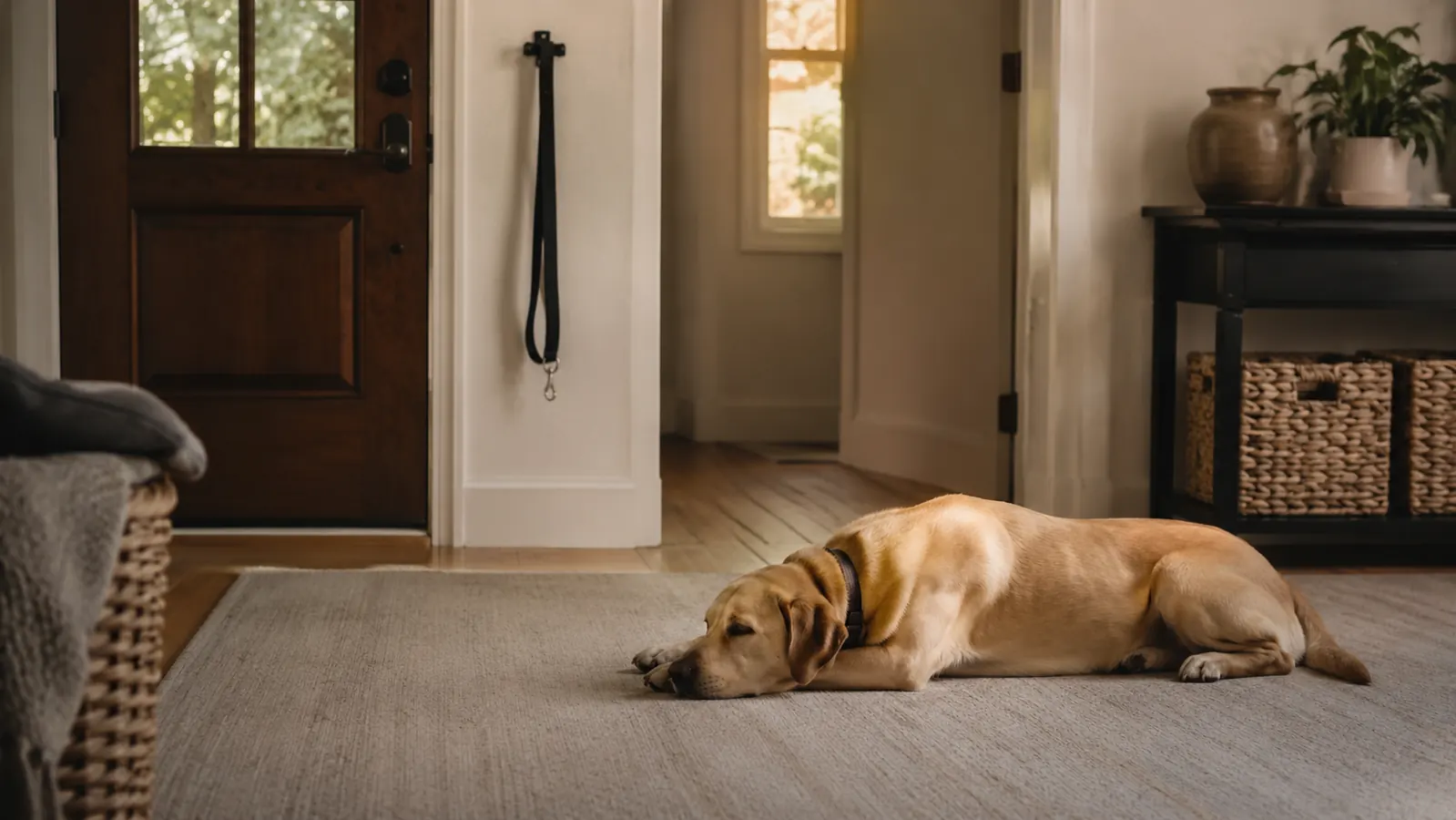
Within a few weeks the morning walk went quiet. The leash hung loose most of the way, the dog trotted at heel without dragging me into a row of mailboxes, and I stopped planting my feet like I was bracing for a tug of war. It was not a different dog. It was the same dog with an anchor that worked, and that is the honest difference between a collar and a harness built for pullers. We also started covering more ground, because a dog that is not fighting is a dog that can actually settle into walking.
What also helped was getting the fit right on the rabbitgoo. It adjusts around the chest and the body, the padding sits where it should, and the reflective trim shows up on the early walks that start before the streetlights turn off. The handle on top is handy at curbs, and the two clips mean you can switch from the front training clip to the back clip for a strolling walk without swapping any gear. I set the fit once and have not needed to touch it since.
One honest note before you buy. A no-pull harness is not a substitute for training, and it will not fix a dog that is genuinely anxious or reactive on the lead. If pulling comes with barking, lunging, or real fear, that is a behavior job a good trainer should lead, not a gear job. For the plain, everyday puller that is simply strong and single-minded, this rabbitgoo is where I would spend the money first.
What I'd Tell You If We Were Sitting at My Kitchen Table
If you are worn out by walks, look at the clip placement before you blame the dog. Buy a harness with the connector on the chest, take the pressure off the throat, and give the dog a couple of weeks to settle into it. Keep the first walks short, reward the loose moments, and do not expect the harness to do the teaching on its own. Buy the harness for the leverage, do the training for the habit, and you will end up with a walk you look forward to. That is the whole honest answer.
Give the front clip two weeks before you judge it
The biggest change is the clip in front, and it takes a handful of walks for the dog to relearn the feel of a loose lead. The rabbitgoo no-pull harness is padded, adjustable, reflective, and built for strong pullers. If your walks have become a daily fight, this is the cheapest first step I know.
Amazon Check Today's Price on Amazon →